
Britannica
Sources used in this answer
Why do herbivores often avoid plants with high levels of tannins or alkaloids?
Created from Britannica articles
using AI.
AI can make mistakes, so verify using Britannica articles.
Feeding behaviour
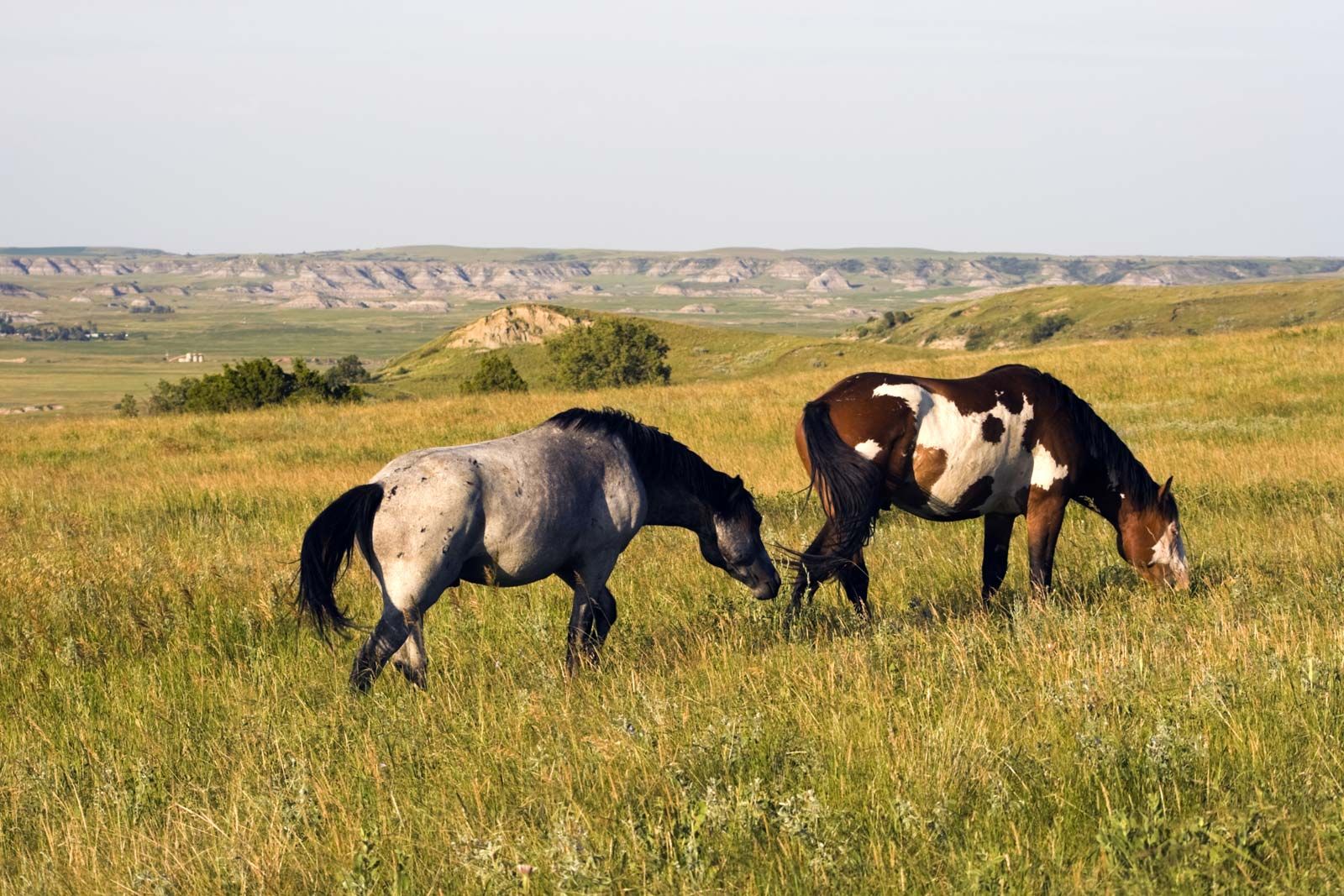
Wild horses graze in the Badlands of North Dakota.
Herbivores often avoid plants with high levels of tannins or alkaloids because these substances act as chemical defenses that deter consumption.123
- Alkaloids: These nitrogen-containing compounds are frequently bitter and often produce strong physiological reactions or toxicity when ingested. Because herbivores have developed a highly developed ability to taste bitterness, they use this sense to detect and reject potentially poisonous plants.245
- Tannins: These phenolic compounds are astringent, which makes them unpalatable to many herbivores. They serve as a significant deterrent to feeding by creating an unpleasant sensation during consumption.236
In many cases, these secondary metabolites function as a protective mechanism for the plant. If an animal consumes a plant containing these chemicals, it may learn to associate the specific flavor with negative postingestive effects, leading to future avoidance of that food source. While some animals can adapt, the presence of these compounds generally reduces the nutritional accessibility or safety of the plant tissue, prompting herbivores to seek more suitable forage.153267