
Britannica
Sources used in this answer
Why do burn scars need protection from sunlight?
Created from Britannica articles
using AI.
AI can make mistakes, so verify using Britannica articles.
burn
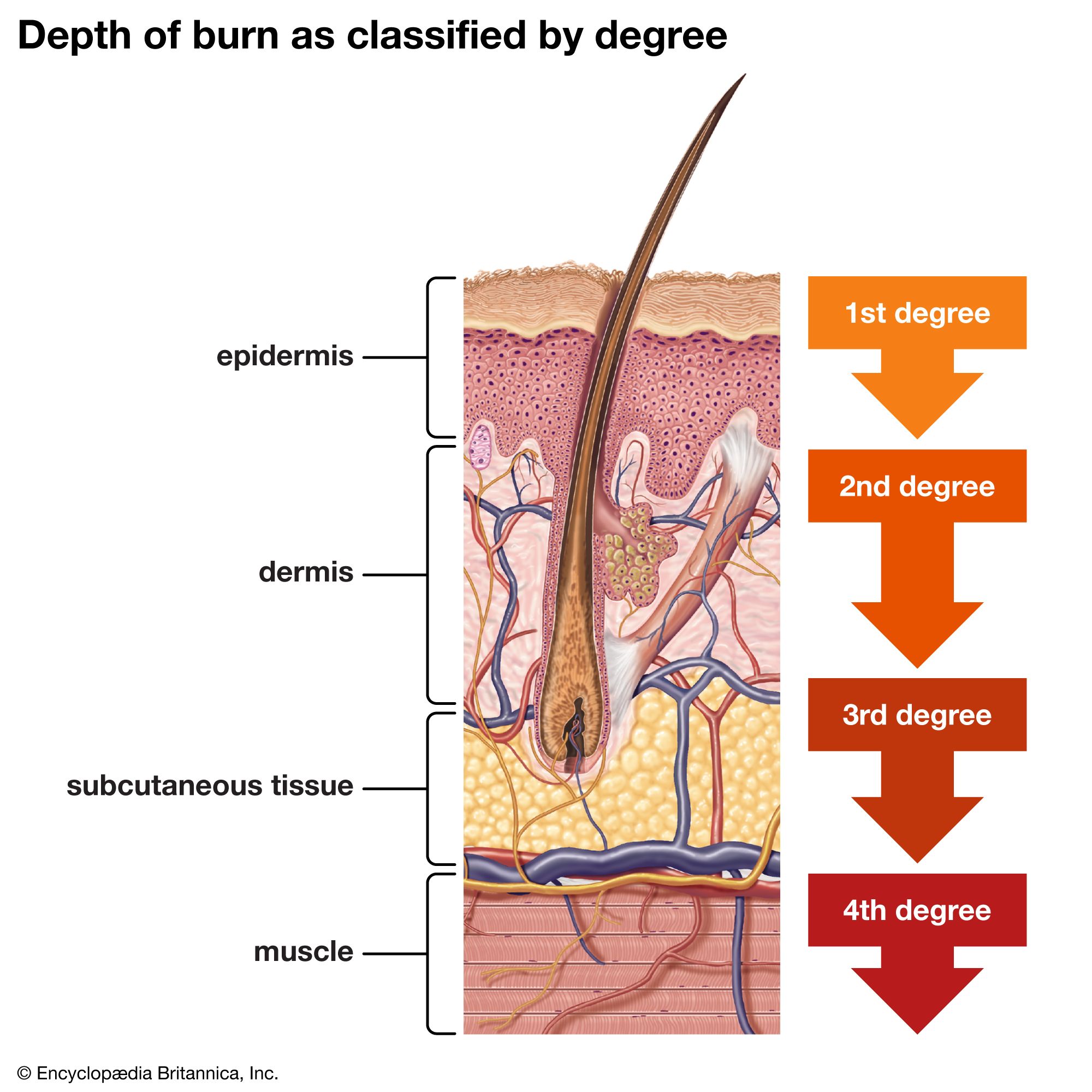
This diagram shows how burn injuries are classified by severity. First-degree burns damage the outer skin, known as the epidermis. First-degree burns are the least severe form of burn injury. Second-degree burns damage the outer skin and some of the underlying skin, known as the dermis, which also includes some connective tissue. Third-degree burns damage all the layers of skin, including subcutaneous tissue. Fourth-degree burns, which are the most severe, destroy every layer of skin and also damage muscle, tendons, and bones.
Burn scars require special care because they are highly susceptible to damage and irritation. It is essential to avoid exposing these scars to sunlight, as the skin in these areas may have compromised protective mechanisms following a burn injury.
For scars located in areas frequently exposed to the sun, such as the face and hands, it is recommended to use an ultraviolet screening agent, or sunblock, to provide necessary protection. This precaution is particularly important because severe burns can destroy sweat glands, sebaceous glands, and hair follicles, leaving the scarred skin prone to drying, cracking, and itching. Protecting these areas helps maintain the integrity of the skin during the rehabilitation process.1