
Britannica
Sources used in this answer
Why can an organism’s coloration look different to different viewers?
Created from Britannica articles
using AI.
AI can make mistakes, so verify using Britannica articles.
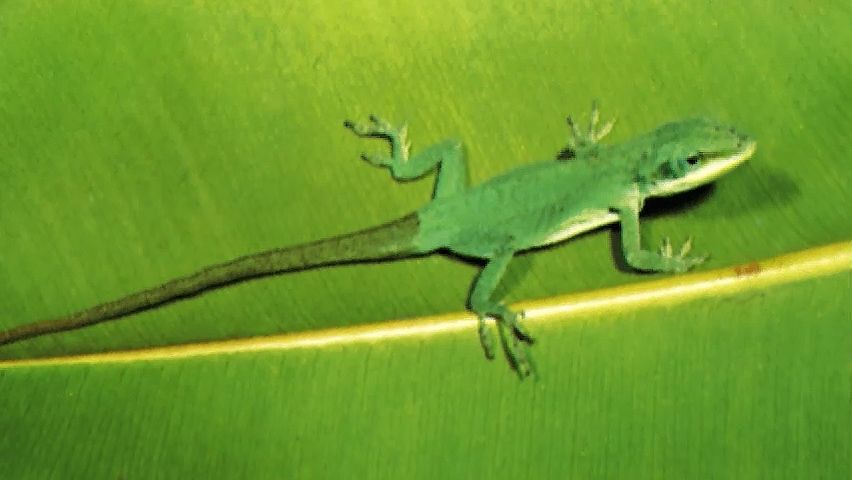
coloration
The anole changes color in response to its stress level.
An organism’s coloration can appear different to various viewers because perceived coloration is not an inherent property of the organism alone; rather, it is a dynamic characteristic determined by the interaction between the organism, the environment, and the viewer’s visual system.1
Several factors contribute to these differences:
- Visual Capabilities: The spectral sensitivity of a viewer’s eyes—such as the range of wavelengths they can detect—profoundly influences how they perceive color. For example, many insects can perceive ultraviolet light, revealing patterns on flowers that are invisible to the human eye. Similarly, different species possess varying types of photoreceptors (cones) that are tuned to different peak wavelengths, meaning an organism may appear vibrant to a member of its own species but dull or differently colored to another.2134
- Structural Coloration: Some colors are produced by physical structures that fractionate light, such as through interference or scattering. These colors can change depending on the angle of vision or the quality and quantity of the light striking the organism.156
- Neural Processing: Once light is detected, the brain encodes and integrates the visual stimulus. Different nervous systems may amplify contrast or movement while ignoring other properties, leading to different interpretations of the same visual input.2