
Britannica
Sources used in this answer
Why can active searching for food be worth the energy it requires?
Created from Britannica articles
using AI.
AI can make mistakes, so verify using Britannica articles.
Feeding behaviour
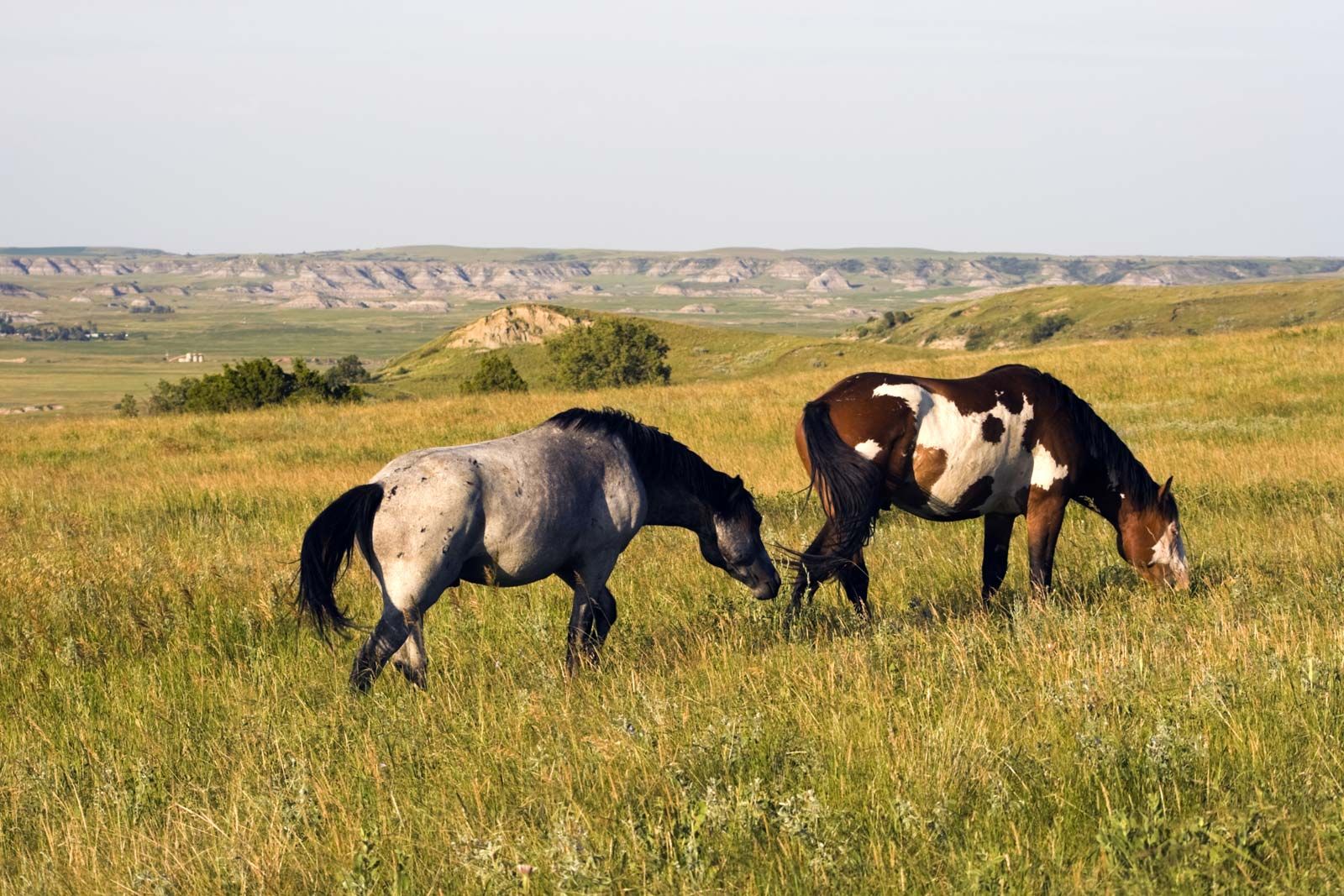
Wild horses graze in the Badlands of North Dakota.
Active searching for food is a significant expenditure of energy, but it is often a highly adaptive strategy because it allows an animal to locate and exploit areas where food is concentrated. By actively moving through their environment—whether by swimming, flying, or traversing solid surfaces—animals can access a vast, diverse array of food sources that are not available to those that remain stationary.1
This method of foraging is particularly effective because it enables an animal to:
- Maximize Intake: By seeking out high-density food patches, an animal can increase its net rate of food intake, which is a core principle of optimal foraging theory.2
- Improve Efficiency: Through experience and learning, animals can refine their search patterns, becoming more efficient at identifying stimuli that signal the presence of food and determining the most effective ways to capture it.23
- Adapt to Scarcity: Active searchers can adjust their behavior based on their hunger level and their knowledge of the environment; when food is scarce, they may be willing to expend more energy or take greater risks to secure resources that they would otherwise ignore during times of plenty.3
Ultimately, the energy invested in active locomotion is offset by the increased probability of successfully securing the nutrients necessary for survival, growth, and reproduction.1