
Britannica
Sources used in this answer
Why are trans fats useful in margarine and shortening?
Created from Britannica articles
using AI.
AI can make mistakes, so verify using Britannica articles.
Trans fat
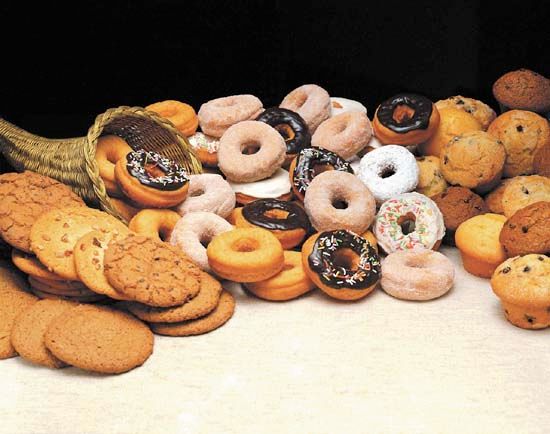
Commercially manufactured foods, including cookies, doughnuts, and muffins, often contain trans fats.
Trans fats are a byproduct of the industrial process known as hydrogenation, which is used to modify liquid vegetable oils for use in products like margarine and shortening.12
This process is useful to food manufacturers for several key reasons:
- Texture and Consistency: Hydrogenation converts liquid unsaturated fats into a semisolid or "plastic" form. This provides the desired solid, spreadable, or pliable consistency required for products like margarine and shortening, which would otherwise remain liquid at room temperature.123
- Stability and Shelf Life: Unsaturated fats are naturally susceptible to rancidity caused by oxidation when exposed to air. Hydrogenation makes these fats more stable and resistant to oxidation, significantly extending the shelf life and commercial value of the food products.12
While these properties were historically advantageous for food production, it is important to note that trans fats are associated with serious health risks, including an increased likelihood of heart disease, stroke, and type II diabetes. Due to these dangers, many health organizations and governments have moved to regulate or ban their use in favor of safer alternatives.2