
Britannica
Sources used in this answer
Why are the later factors in the Drake equation more uncertain than the first factors?
Created from Britannica articles
using AI.
AI can make mistakes, so verify using Britannica articles.
extraterrestrial life
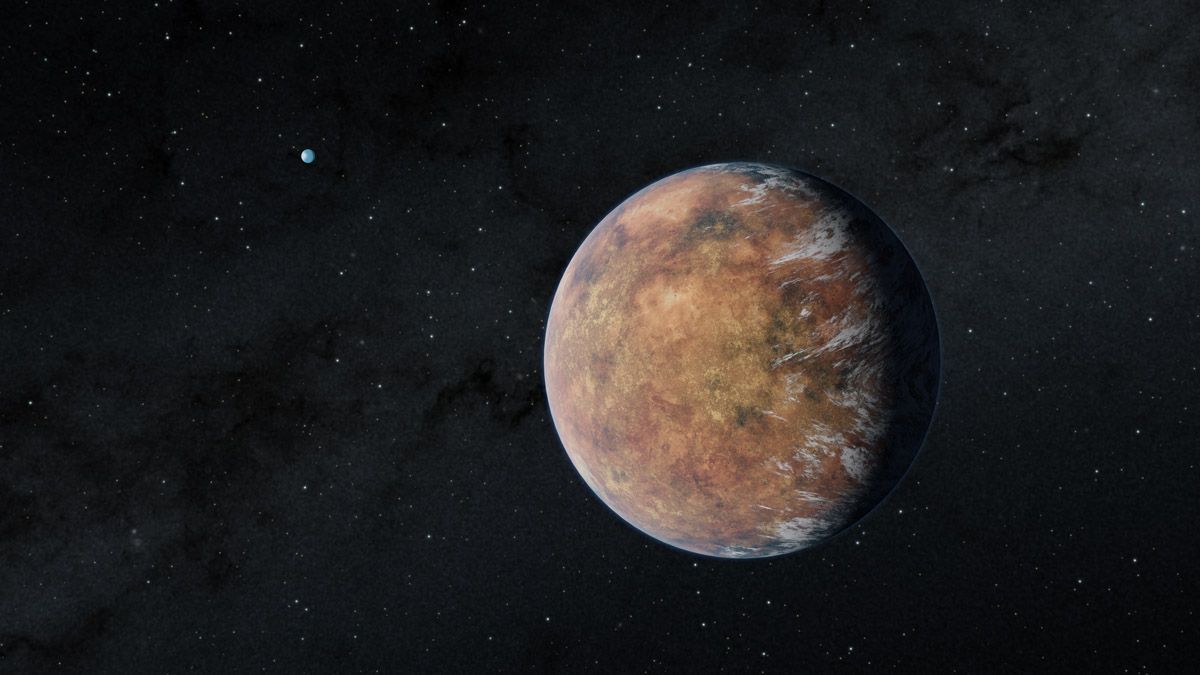
An illustration of the Earth-size planet TOI 700e orbiting within the habitable zone of its star. The habitable zone is the area around a star where liquid water, and thus possibly life, can survive on a planet's surface. Its Earth-size sibling, TOI 700d, can be seen in the distance.
The Drake equation estimates the number of active, technologically advanced civilizations in the Milky Way Galaxy by multiplying several astronomical, biological, and sociological factors. While the initial factors—such as the rate of star formation ()—are based on observable astronomical data and are relatively reliable, uncertainty increases progressively with each subsequent factor.12
The later factors are more uncertain because they involve complex, non-astronomical variables that are difficult to quantify:12
- Biological and Evolutionary Factors: Parameters like the fraction of planets where life arises () and where intelligent life evolves () depend on historical accidents and specific evolutionary paths that are not well understood. For instance, the evolution of intelligence on Earth may not be a repeatable or inevitable process.2
- Sociological Factors: The fraction of intelligent species that develop high technology () and the average lifetime of such civilizations () are highly speculative.12
- Lack of Data: Unlike star formation, we have no empirical data for extraterrestrial life or the longevity of technical civilizations, making these estimates little more than informed guesses.2