
Britannica
Sources used in this answer
Why are separations used before measuring an analyte?
Created from Britannica articles
using AI.
AI can make mistakes, so verify using Britannica articles.
sample preparation
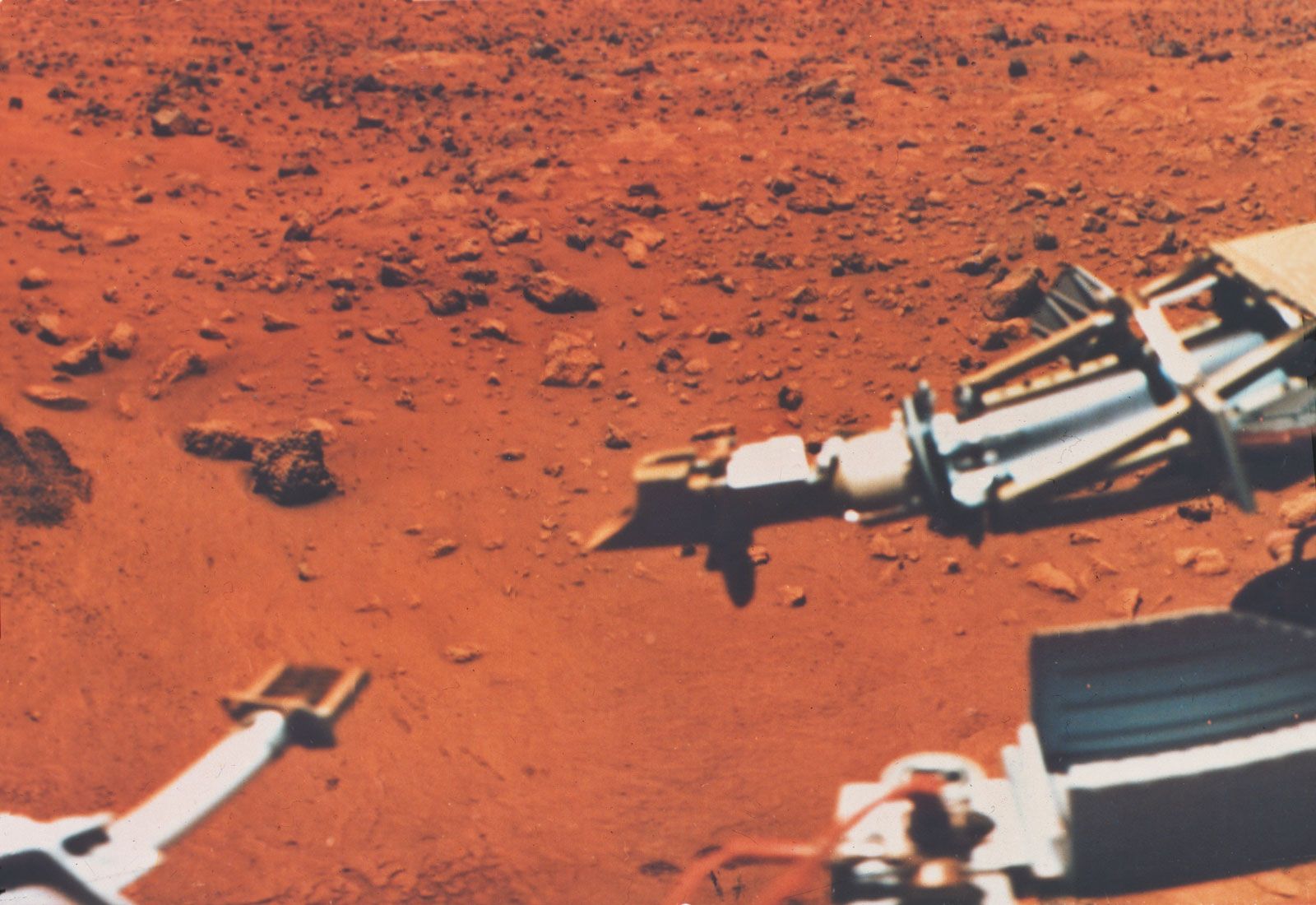
Viking 1's sample scoop, poised to extract material from the surface of Mars.
In analytical chemistry, separations are essential during sample preparation primarily to ensure the accuracy of the final measurement. Analysts employ these techniques for two main reasons:
- Low Analyte Concentration: If the target species is present at very low levels, separation techniques are used to isolate and concentrate the analyte, making it detectable and measurable.1
- Removal of Interferences: Samples often contain substances that can interfere with the analysis. Separations allow the analyst to remove these interfering species or isolate the analyte from the complex sample matrix.12
When physical separation is not required, analysts may use masking agents—additives that chemically convert interfering elements into non-interfering forms—to facilitate an accurate measurement. Common separation methods include distillation, gas chromatography, solvent extraction, ion exchange, and precipitation.132