
Britannica
Sources used in this answer
Why are burns on the face, hands, and feet especially serious?
Created from Britannica articles
using AI.
AI can make mistakes, so verify using Britannica articles.
burn
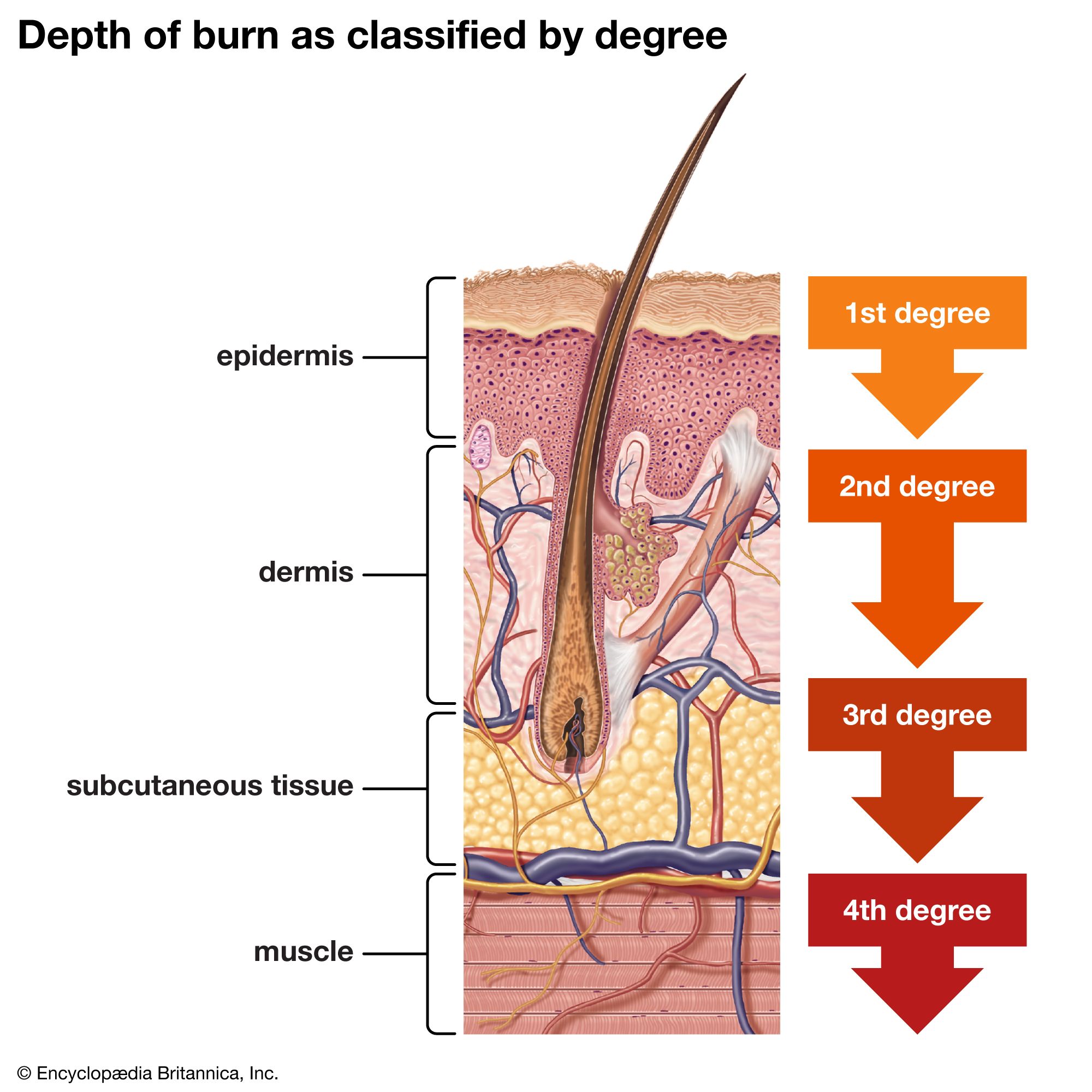
This diagram shows how burn injuries are classified by severity. First-degree burns damage the outer skin, known as the epidermis. First-degree burns are the least severe form of burn injury. Second-degree burns damage the outer skin and some of the underlying skin, known as the dermis, which also includes some connective tissue. Third-degree burns damage all the layers of skin, including subcutaneous tissue. Fourth-degree burns, which are the most severe, destroy every layer of skin and also damage muscle, tendons, and bones.
Burns on the face, hands, and feet are considered especially serious because of the high risk of functional impairment, severe scarring, and complex medical complications associated with these sensitive areas.12
- Functional and Aesthetic Impact: The face, hands, and feet are critical for daily function and appearance. Injuries to these areas often require priority in surgical skin grafting to restore movement and minimize disfigurement.2
- Respiratory Risks: Burns to the face are frequently associated with the inhalation of smoke, soot, or hot air, which can cause life-threatening respiratory damage and airway obstruction.23
- Healing and Mobility: Hands and feet contain complex structures, including joints and tendons. Scarring in these regions can lead to disabling contractures—permanent tightening of the skin, muscles, and tendons—that severely restrict mobility.2
- Medical Management: Due to these risks, medical guidelines dictate that even second-degree burns affecting the face, hands, or feet should receive prompt professional medical attention, regardless of the total body surface area involved.1