
Britannica
Sources used in this answer
Which Kepler discoveries were Earth-size planets in habitable zones?
Created from Britannica articles
using AI.
AI can make mistakes, so verify using Britannica articles.
extraterrestrial life
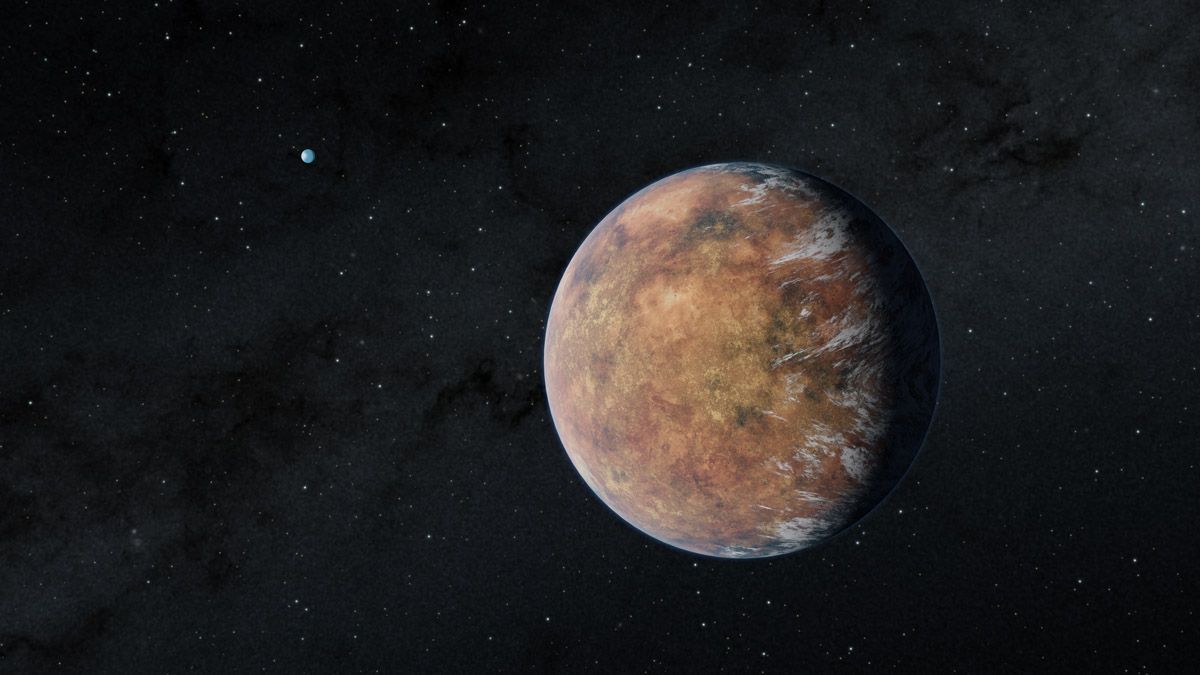
An illustration of the Earth-size planet TOI 700e orbiting within the habitable zone of its star. The habitable zone is the area around a star where liquid water, and thus possibly life, can survive on a planet's surface. Its Earth-size sibling, TOI 700d, can be seen in the distance.
The Kepler mission significantly advanced our understanding of extrasolar planets by identifying several worlds that are roughly Earth-sized and located within their stars' habitable zones.
Key discoveries include:
- Kepler-186f: This was the first Earth-size planet discovered within the habitable zone of its star.1
- General Findings: By the end of its mission, the Kepler satellite had discovered between 2 and 12 planets that are roughly Earth-size and located within their stars' habitable zones.1
While other planets like Kepler-22b were early milestones for being found in a habitable zone, it is larger than Earth (2.4 times the radius). Similarly, Kepler-452b is often noted as the first approximately Earth-sized planet found in the habitable zone of a Sun-like star, though its radius is 1.63 times that of Earth. Additionally, Kepler-20e and Kepler-20f were the first Earth-size planets discovered, though they were not located within their star's habitable zone.123