
Britannica
Sources used in this answer
When do second-degree burns need prompt medical attention?
Created from Britannica articles
using AI.
AI can make mistakes, so verify using Britannica articles.
burn
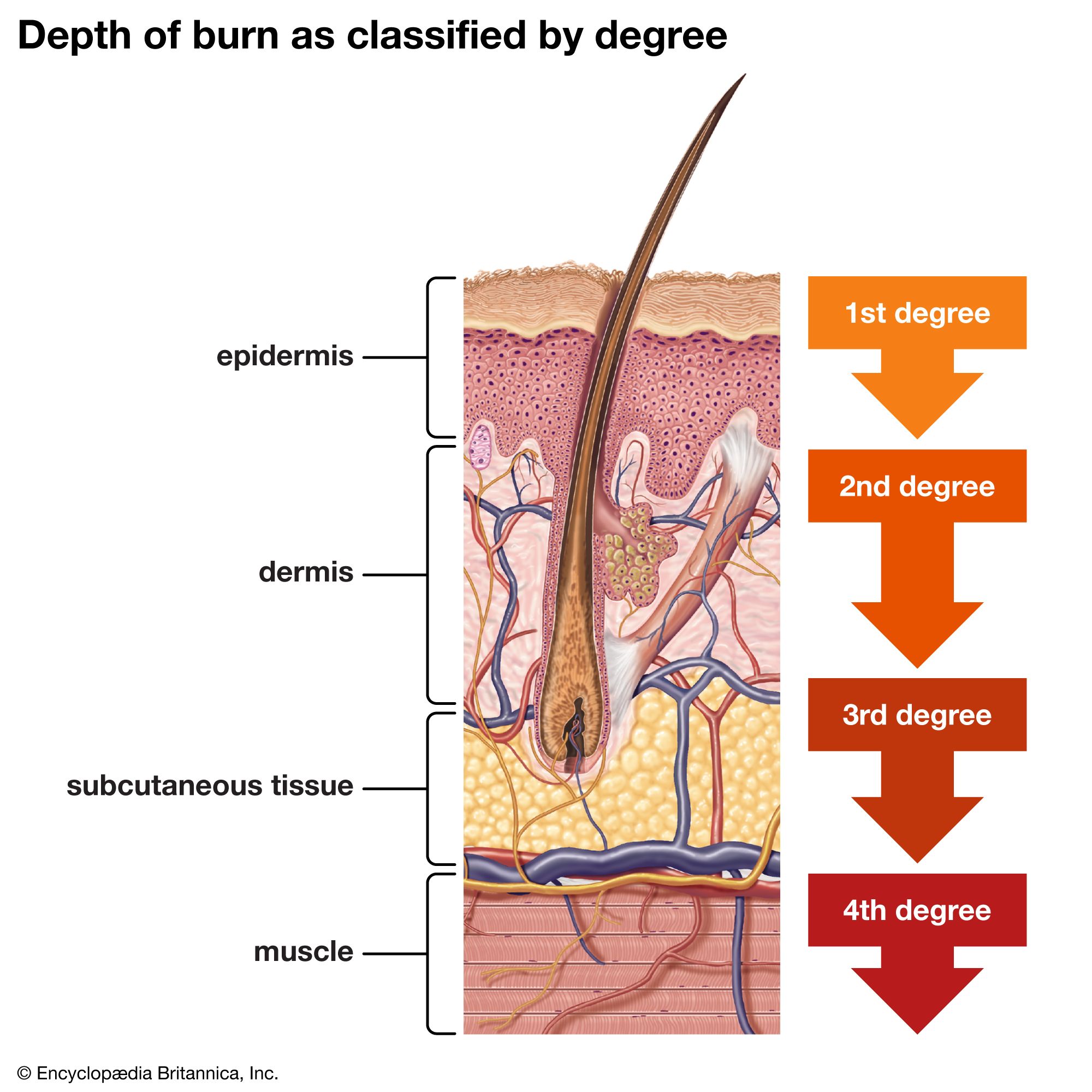
This diagram shows how burn injuries are classified by severity. First-degree burns damage the outer skin, known as the epidermis. First-degree burns are the least severe form of burn injury. Second-degree burns damage the outer skin and some of the underlying skin, known as the dermis, which also includes some connective tissue. Third-degree burns damage all the layers of skin, including subcutaneous tissue. Fourth-degree burns, which are the most severe, destroy every layer of skin and also damage muscle, tendons, and bones.
Second-degree burns require prompt medical attention if they meet any of the following criteria:
- The burn covers more than 15 percent of an adult's body surface area.1
- The burn covers more than 10 percent of a child's body surface area.1
- The injury affects the face, hands, or feet.1
While small second-degree burns can often be managed with first aid—such as immersing the wound in cool tap water to dissipate heat and cleansing it with mild soap and water—larger or more sensitive injuries necessitate professional evaluation to prevent complications. You should avoid applying home remedies like butter or petroleum jelly, as these can trap heat and worsen the injury.12