
What is the habitable zone around a star?
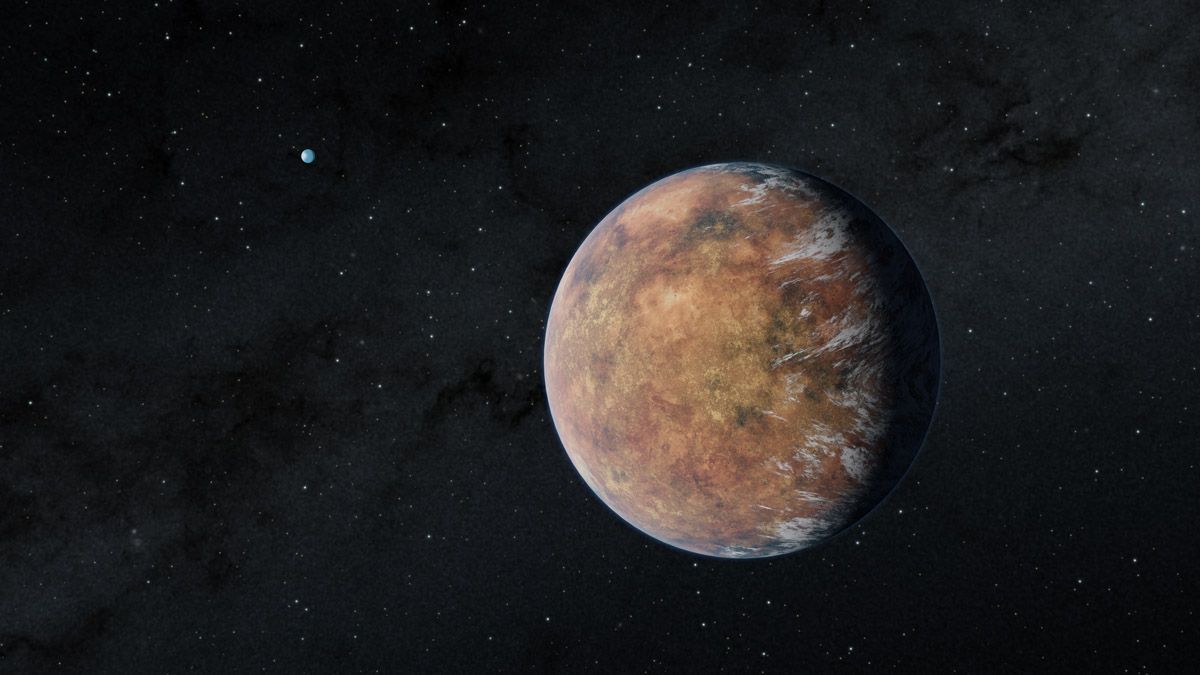
The habitable zone, often referred to as the Goldilocks zone, is the orbital region around a star where an Earth-like planet can maintain liquid water on its surface. This definition is based on the hypothesis that extraterrestrial life requires liquid water, similar to life on Earth.12
The boundaries of this zone are determined by a planet's surface temperature:
* Inner boundary: The region where a runaway greenhouse effect would cause water to boil away.1
* Outer boundary: The region where temperatures are too cold to maintain liquid water.1
The location of the habitable zone depends on a star's luminosity and mass. Because a star's luminosity changes over time, the boundaries of its habitable zone shift, leading scientists to identify a "continuously habitable zone" where conditions remain stable over long periods. While this zone is a useful tool for identifying potentially life-supporting planets, it is a conservative estimate; life could potentially exist outside these bounds through internal energy sources like tidal heating or in subsurface reservoirs.1