
Britannica
Sources used in this answer
What is the Great Filter explanation for the Fermi paradox?
Created from Britannica articles
using AI.
AI can make mistakes, so verify using Britannica articles.
extraterrestrial life
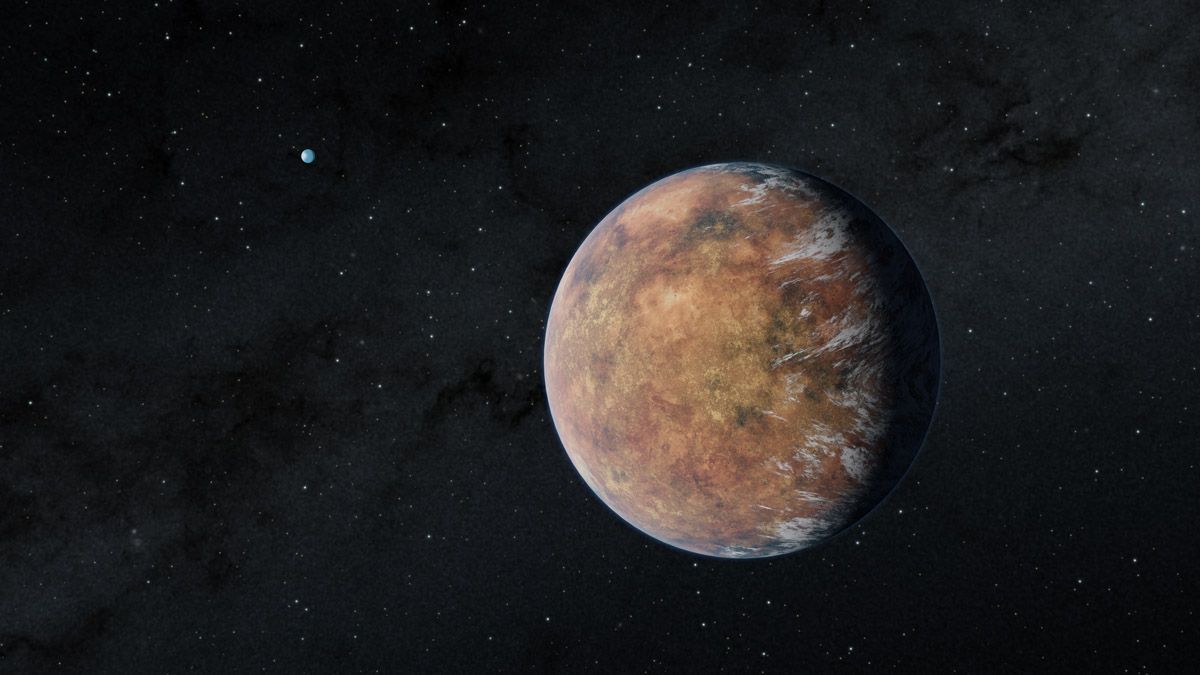
An illustration of the Earth-size planet TOI 700e orbiting within the habitable zone of its star. The habitable zone is the area around a star where liquid water, and thus possibly life, can survive on a planet's surface. Its Earth-size sibling, TOI 700d, can be seen in the distance.
The "Great Filter" is a hypothesis proposed by economist Robin Hanson to explain the Fermi paradox—the contradiction between the high statistical probability of extraterrestrial intelligence and the total lack of evidence for it.1
The theory suggests that there is an evolutionary or technological "wall" or barrier in the development of life that is extremely difficult to overcome. This filter represents a step in the chain of circumstances from the formation of a habitable planet to the achievement of galactic colonization that is so improbable it prevents most civilizations from ever reaching an advanced stage.21
Scientists generally view the Great Filter through two lenses:
- Behind us: If the filter is in our past, it implies that the emergence of intelligent life is exceptionally rare. This could mean that the origin of life itself or the transition from simple single-celled organisms to complex life was the improbable event, making humanity a rare survivor.2
- Ahead of us: If the filter is in our future, it suggests that advanced civilizations inevitably hit a wall—such as self-destruction through technology or environmental collapse—before they can colonize the galaxy, implying a grim outlook for our own long-term survival.2