
Britannica
Sources used in this answer
What factors worsened the Zimbabwe cholera epidemic of 2008–09?
Created from Britannica articles
using AI.
AI can make mistakes, so verify using Britannica articles.
cholera
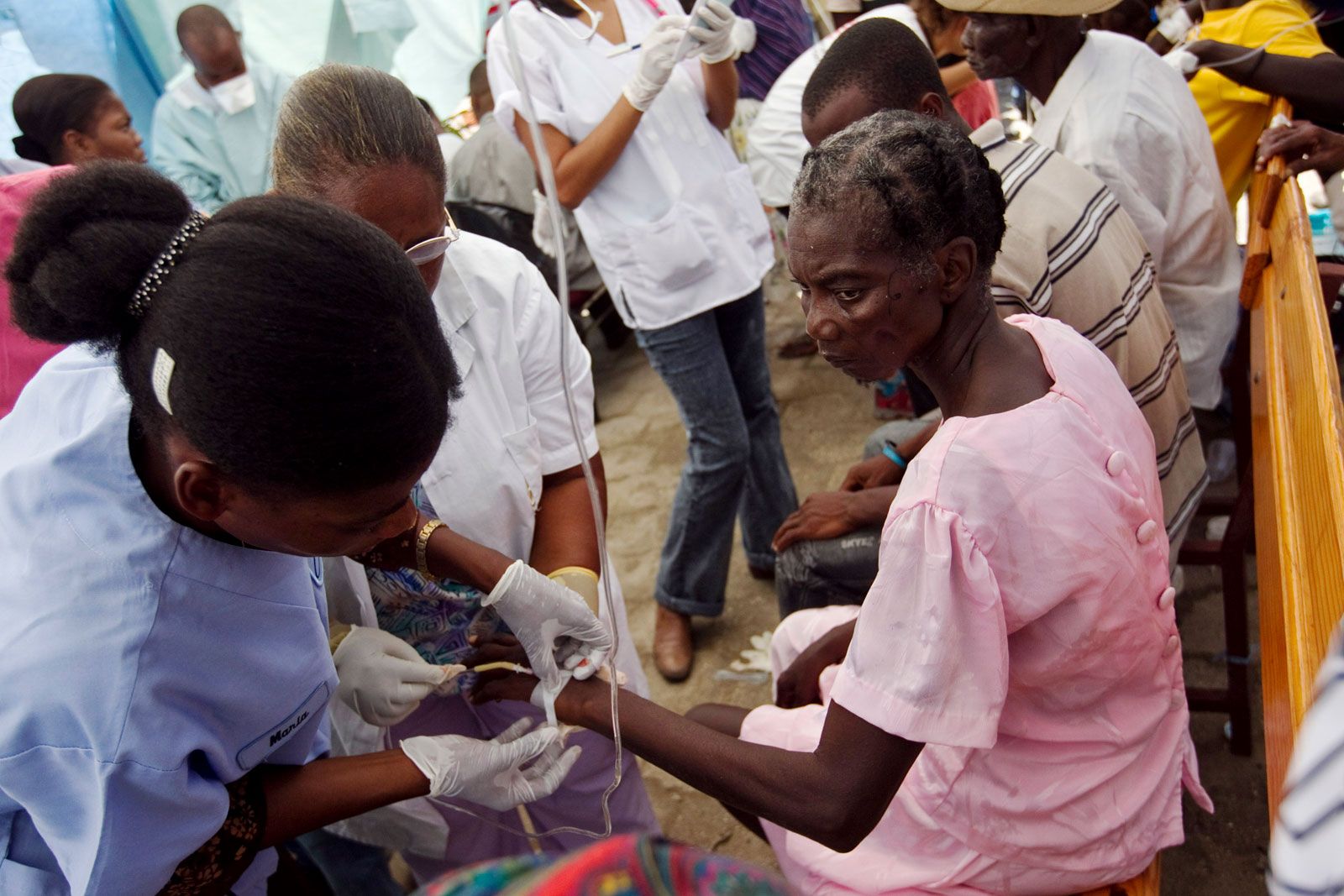
A woman with cholera being treated by nurses at St. Nicholas Hospital in Saint-Marc, Haiti, 2010.
The 2008–09 cholera epidemic in Zimbabwe was significantly worsened by a combination of systemic infrastructure failure and economic instability. Key factors included:
- Infrastructure Collapse: The failure of sewage systems led to raw sewage contaminating streets and rivers, while the breakdown of sanitary regulations caused refuse to accumulate in public spaces.1
- Economic Crisis: Severe economic inflation forced many hospitals to close due to an inability to purchase essential medicine. By December 2008, the country also ran out of water-purification chemicals, forcing the population to rely on unsafe water sources.1
- Resource Scarcity: Widespread food shortages and the unavailability of clean drinking water increased the population's vulnerability to infection.1
- Health System Limitations: The fragmented state of the health care system and the closure of clinics hindered disease surveillance and treatment, causing the fatality rate to climb to 5.7 percent—and as high as 50 percent in some rural areas—far exceeding the typical 1 percent rate for such outbreaks.1
These conditions allowed the disease to spread to all 10 of Zimbabwe's provinces and eventually into neighboring countries.1