
Britannica
Sources used in this answer
What conditions contributed to the Haiti cholera outbreak of 2010–11?
Created from Britannica articles
using AI.
AI can make mistakes, so verify using Britannica articles.
cholera
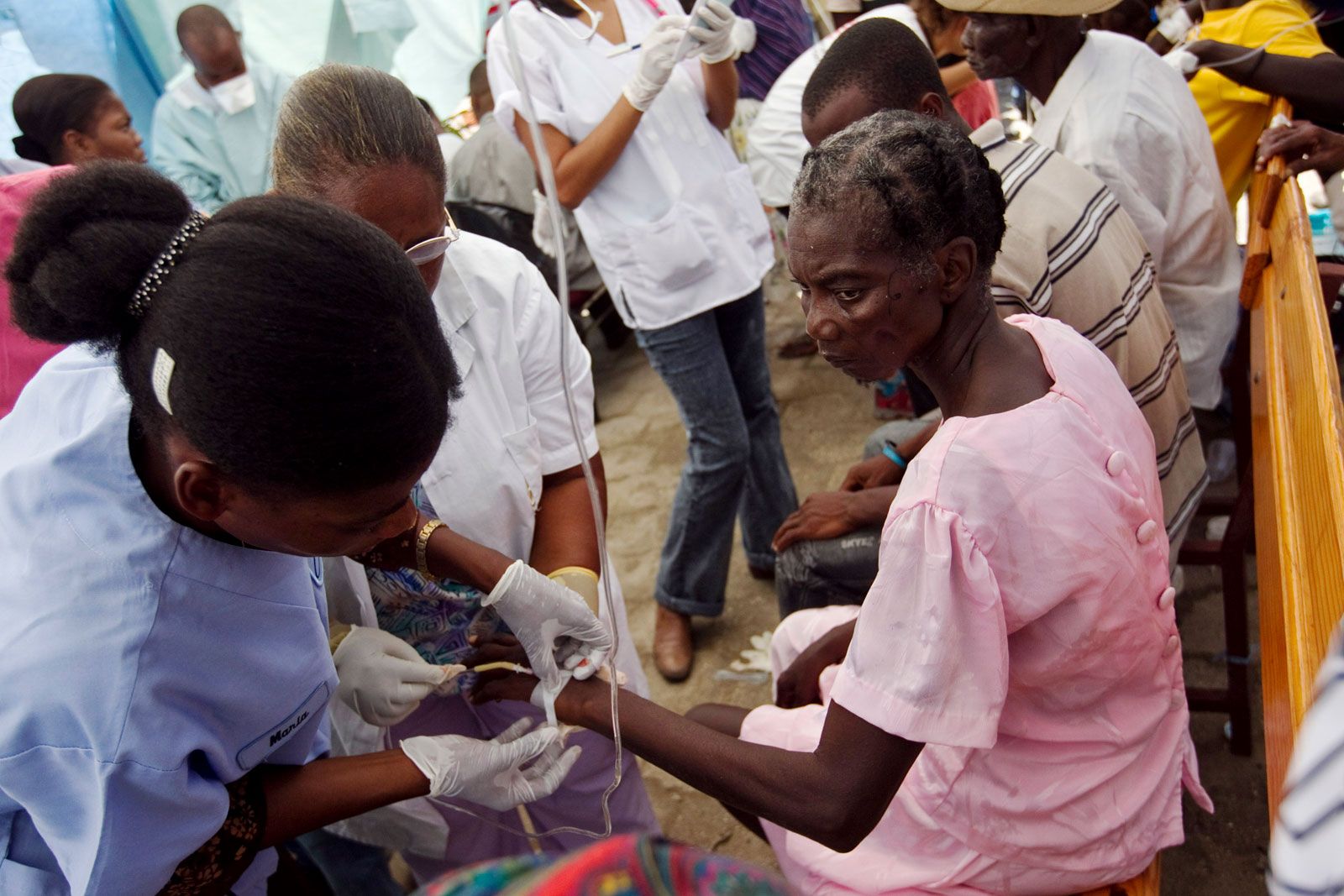
A woman with cholera being treated by nurses at St. Nicholas Hospital in Saint-Marc, Haiti, 2010.
The 2010–11 cholera outbreak in Haiti was driven by a combination of environmental contamination and the introduction of a foreign bacterial strain into a vulnerable population.
- Introduction of the Pathogen: The outbreak was caused by the El Tor biotype of Vibrio cholerae, a South Asian strain likely introduced to the region through human activity. Evidence, including the timing of a parallel outbreak in Kathmandu, indicated that UN peacekeeping forces from Nepal were the source of the contamination.12
- Environmental Contamination: The bacteria entered the Artibonite River, which served as a primary source of drinking water for the local population. Because cholera had not been detected in Haiti for over a century, the population lacked immunity to the disease.12
- Infrastructure and Sanitation: The devastating 2010 earthquake had severely compromised the country's infrastructure, leaving millions displaced in unsanitary tent settlements. The lack of access to clean water and proper waste-management systems created ideal conditions for the rapid spread of the waterborne disease.23
The international community has a moral obligation to ensure that humanitarian interventions prioritize the health and safety of local populations, including the implementation of rigorous sanitation standards to prevent the introduction of infectious diseases.