
Britannica
Sources used in this answer
What can cause a burn injury besides fire?
Created from Britannica articles
using AI.
AI can make mistakes, so verify using Britannica articles.
burn
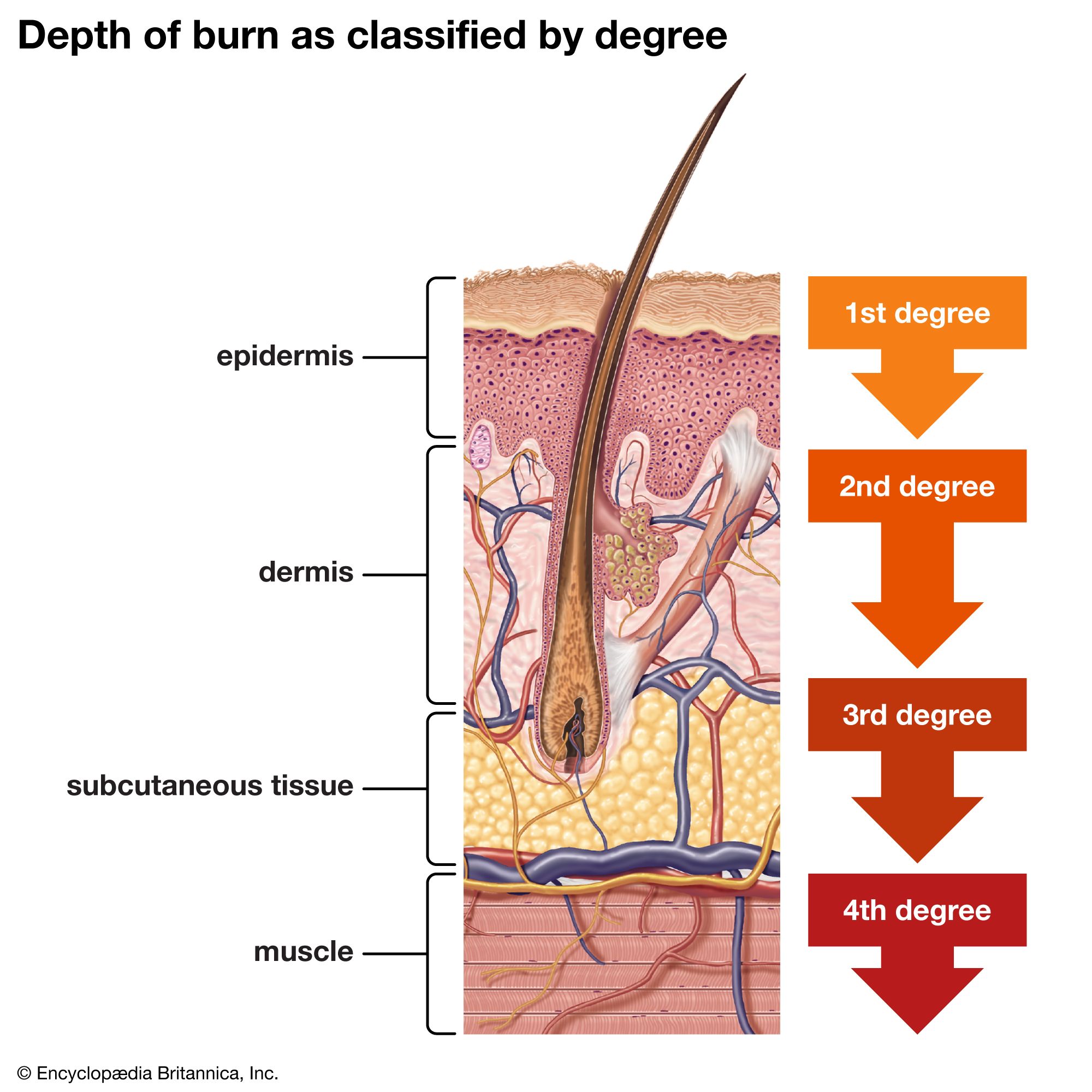
This diagram shows how burn injuries are classified by severity. First-degree burns damage the outer skin, known as the epidermis. First-degree burns are the least severe form of burn injury. Second-degree burns damage the outer skin and some of the underlying skin, known as the dermis, which also includes some connective tissue. Third-degree burns damage all the layers of skin, including subcutaneous tissue. Fourth-degree burns, which are the most severe, destroy every layer of skin and also damage muscle, tendons, and bones.
Beyond contact with flames, burn injuries can be caused by several other factors that damage body tissue. These include:1
- Hot substances: Contact with hot liquids or steam can cause burns, often referred to as scalds.12
- Chemicals: Exposure to caustic chemicals can result in significant tissue damage.1
- Electricity: Electrical currents can cause deep burns that may extend into subcutaneous tissue, muscle, fascia, and bone.1
- Radiation: This includes damage from sunlight (ultraviolet rays), X-rays, or ionizing radiation from radioactive materials.13
- Friction: Intense friction against the skin can result in an injury known as a brush burn.4
While fire is a common cause, these alternative sources are equally capable of causing varying degrees of tissue destruction, ranging from superficial first-degree injuries to severe, full-thickness third-degree or fourth-degree burns.15