
Britannica
Sources used in this answer
What are the symptoms of shock after a severe burn?
Created from Britannica articles
using AI.
AI can make mistakes, so verify using Britannica articles.
burn
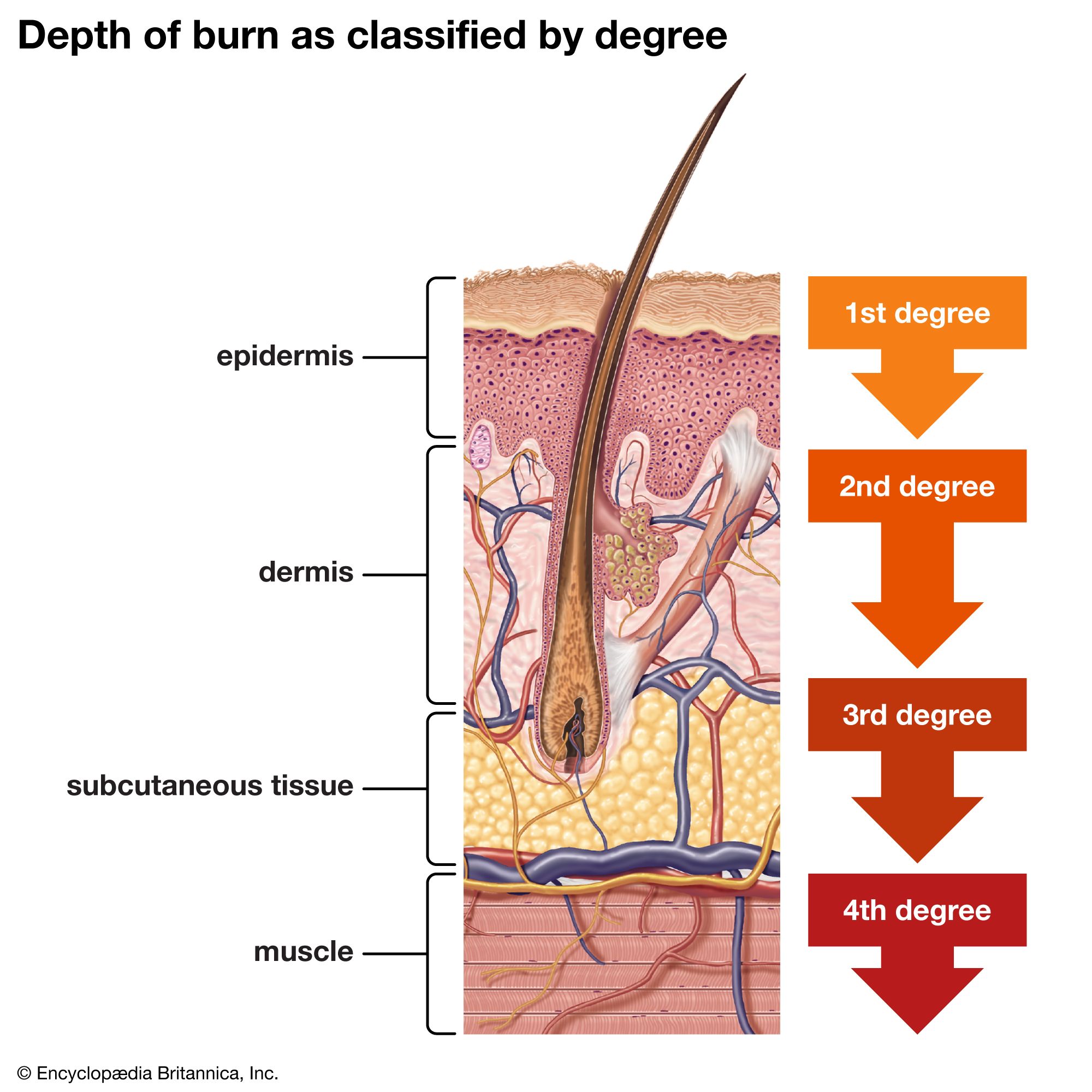
This diagram shows how burn injuries are classified by severity. First-degree burns damage the outer skin, known as the epidermis. First-degree burns are the least severe form of burn injury. Second-degree burns damage the outer skin and some of the underlying skin, known as the dermis, which also includes some connective tissue. Third-degree burns damage all the layers of skin, including subcutaneous tissue. Fourth-degree burns, which are the most severe, destroy every layer of skin and also damage muscle, tendons, and bones.
Shock following a severe burn is primarily caused by a significant reduction in blood volume due to the loss of plasma and electrolytes through the damaged skin. As the body attempts to compensate for this drop in blood pressure, it triggers cardiovascular reflexes that lead to several characteristic symptoms.1
Common symptoms of shock include:
- Fast pulse rate: An increased heart rate as the body attempts to maintain blood flow.1
- Pallor and cold skin: Caused by the constriction of capillary beds in the skin to prioritize blood flow to vital organs.1
- Increased sweating and dilated pupils: Resulting from heightened activity of the autonomic nervous system.1
- Mental confusion and air hunger: These occur due to inadequate oxygen delivery to the brain and tissues.1
- Decreased urine flow: A result of reduced renal blood flow, which can progress to kidney failure if not treated.1
It is critical to recognize that third-degree burns are medical emergencies where immersion in cool water should be avoided, as it can intensify circulatory shock. Immediate professional medical intervention is required to manage fluid resuscitation and stabilize the patient.23