
Britannica
Sources used in this answer
What are the signs of a first-degree burn?
Created from Britannica articles
using AI.
AI can make mistakes, so verify using Britannica articles.
burn
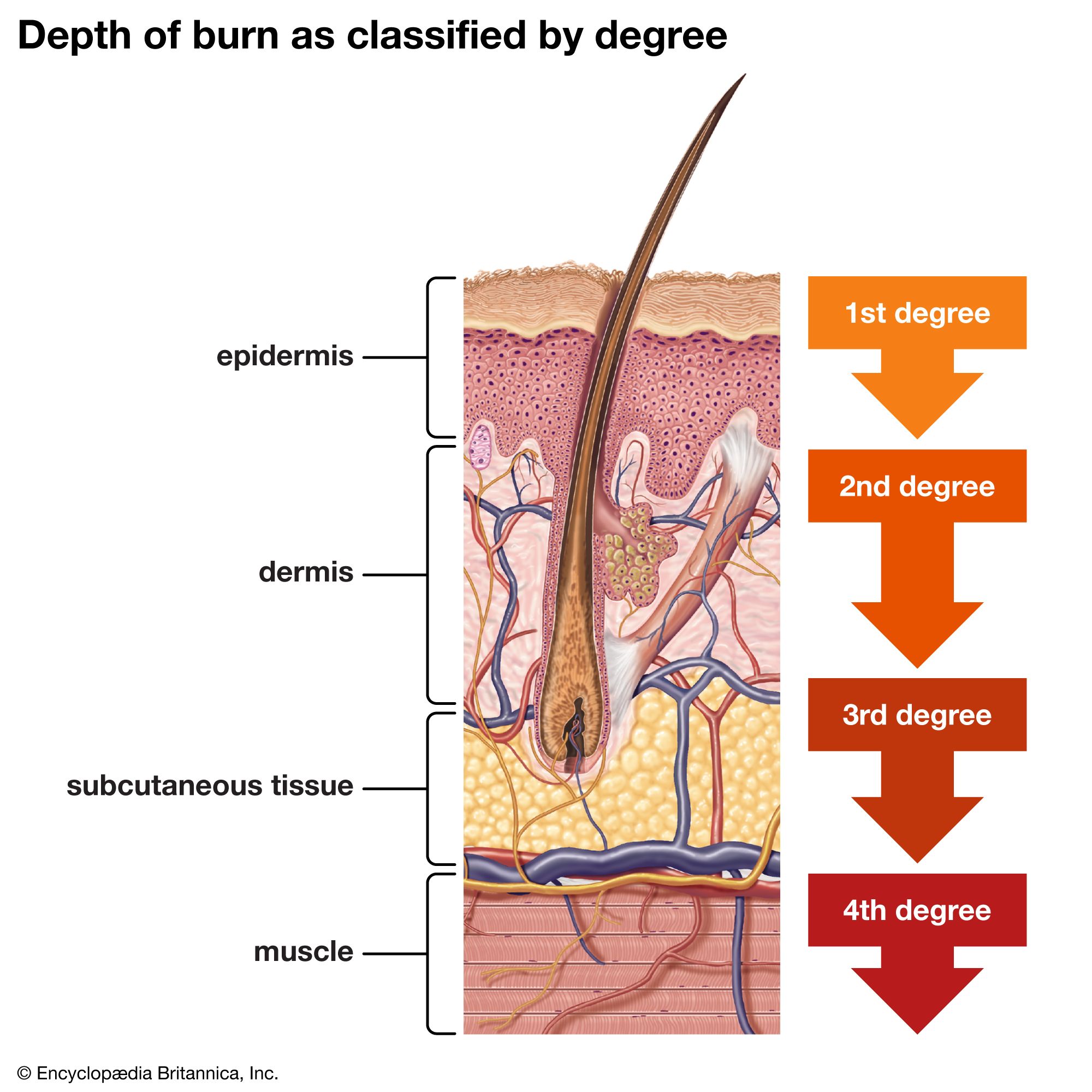
This diagram shows how burn injuries are classified by severity. First-degree burns damage the outer skin, known as the epidermis. First-degree burns are the least severe form of burn injury. Second-degree burns damage the outer skin and some of the underlying skin, known as the dermis, which also includes some connective tissue. Third-degree burns damage all the layers of skin, including subcutaneous tissue. Fourth-degree burns, which are the most severe, destroy every layer of skin and also damage muscle, tendons, and bones.
A first-degree burn is an injury that affects only the epidermis, the outermost layer of the skin. The primary signs of this type of burn include:
- Redness: The affected area typically appears red.
- Pain: These injuries are characterized by the presence of pain.
- Minimal swelling: Any edema—swelling caused by fluid accumulation—in the wounded tissue is minimal.
Notably, first-degree burns do not involve the formation of blisters. A common example of this injury is a moderate sunburn.1