
Britannica
Sources used in this answer
What are the main stages of a complete chemical analysis?
Created from Britannica articles
using AI.
AI can make mistakes, so verify using Britannica articles.
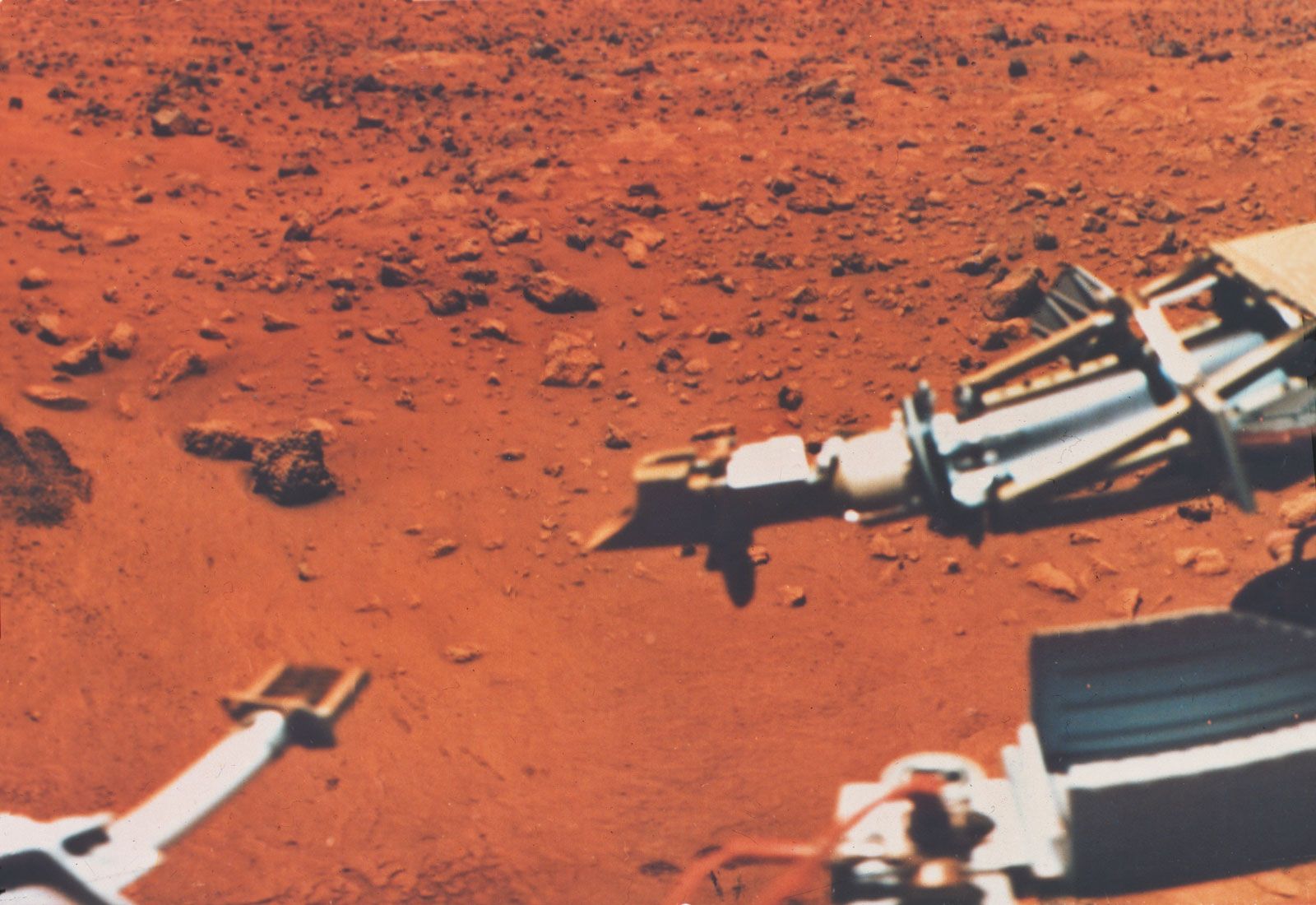
sample preparation
Viking 1's sample scoop, poised to extract material from the surface of Mars.
In analytical chemistry, a complete chemical analysis is a multistep endeavor where each stage must be executed correctly to ensure an accurate result. The process consists of the following six principal stages:
- Sampling: The extraction of a representative piece of material from a larger source. This essential step provides relevance to all subsequent work.12
- Field sample pretreatment: Initial processing of the sample in the field before it reaches the laboratory.1
- Laboratory treatment: The process of preparing the laboratory sample for measurement. This includes converting it into a test sample, potentially grinding or mixing it to ensure it remains representative, and isolating or concentrating the analyte if necessary.123
- Laboratory assay: The measurement phase, where the specific analytical determination is performed.12
- Calculations: Processing the data obtained from the assay.1
- Results presentation: The final reporting of the analytical findings.1
While an analysis encompasses all these steps, some chemists distinguish it from an "assay," which refers specifically to the laboratory portion of the process.1