
Britannica
Sources used in this answer
How have unrelated ant-eating mammals evolved similar feeding adaptations?
Created from Britannica articles
using AI.
AI can make mistakes, so verify using Britannica articles.
Feeding behaviour
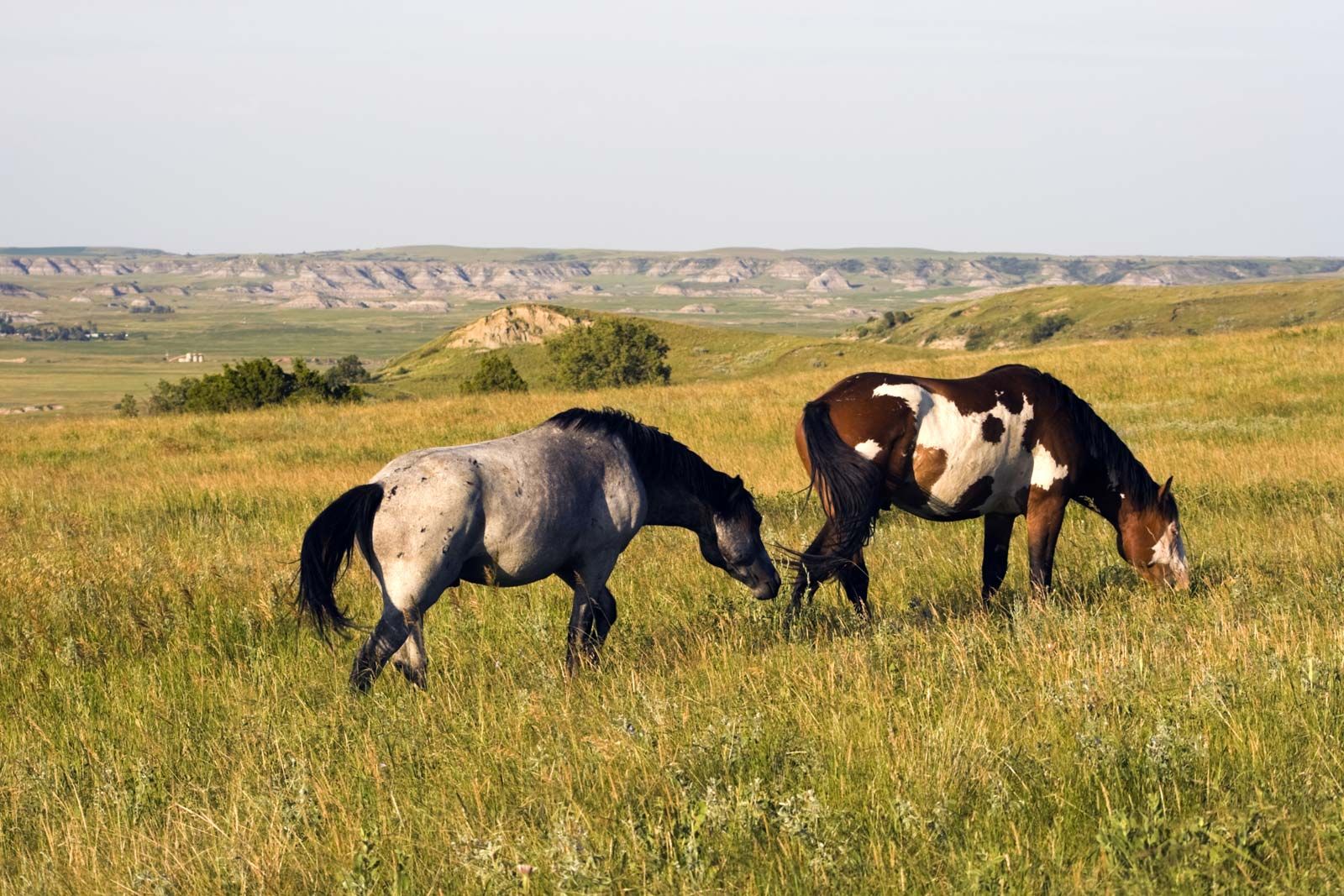
Wild horses graze in the Badlands of North Dakota.
Unrelated ant-eating mammals have evolved similar feeding adaptations through a process known as convergent evolution, where similar environmental pressures lead to analogous physical traits in distantly related species.12
This specialization, termed myrmecophagy, is observed in diverse mammals such as the echidna, numbat, anteater, aardvark, and pangolin. Despite their different evolutionary lineages, these animals share a suite of remarkably similar morphological features:1
- Skull and Jaw: They possess an elongated, rounded skull and a tubular muzzle, paired with a marked reduction in the size of the lower jaw.134
- Dentition: They exhibit a loss or extreme simplification of teeth, as their diet of ants and termites does not require complex chewing.13
- Tongue: They have evolved a wormlike, extensible, and sticky tongue to efficiently lap up insects.134
- Claws: They feature strong, sharp claws used to tear open tough insect mounds and nests.134