
Britannica
Sources used in this answer
How has diet specialization changed mammal teeth?
Created from Britannica articles
using AI.
AI can make mistakes, so verify using Britannica articles.
Feeding behaviour
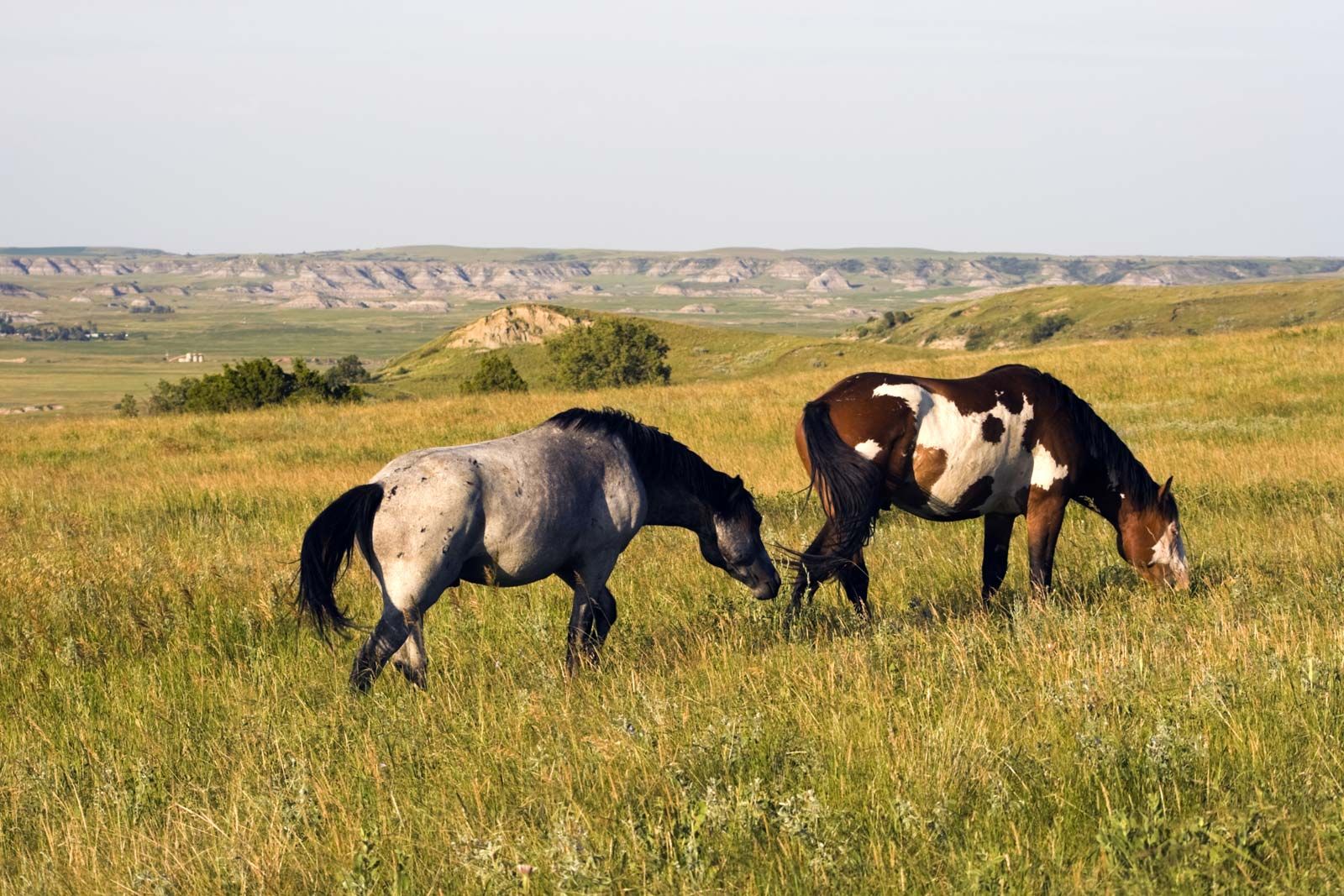
Wild horses graze in the Badlands of North Dakota.
Dietary specialization has driven significant evolutionary changes in mammalian dentition, moving away from the primitive state of high, sharp cusps designed for tearing flesh or crushing arthropod exoskeletons.1
- Herbivores: To process plant material, herbivores have developed complex cheek teeth with expanded grinding surfaces. This often involves "molarization" (flattening and expanding) of premolars and the evolution of rootless teeth that grow continually to counter wear. Many also feature a diastema—a gap in the tooth row—and incisors modified for nipping or gnawing.1
- Omnivores: Mammals such as humans and bears possess bunodont molars, characterized by low, rounded cusps suitable for a varied diet.1
- Myrmecophagy (Ant-eating): Specialized insectivores like the anteater and pangolin exhibit a marked reduction or complete loss of teeth, reflecting a shift toward diets that do not require mechanical mastication.1
- Primates: Evolution has favored a reduction in the total number of teeth and an increase in molar cusp complexity. Adaptations include specialized structures like the dental comb in some strepsirrhines for scraping or grooming.2