
Britannica
Sources used in this answer
How does water move through the water cycle?
Created from Britannica articles
using AI.
AI can make mistakes, so verify using Britannica articles.
water
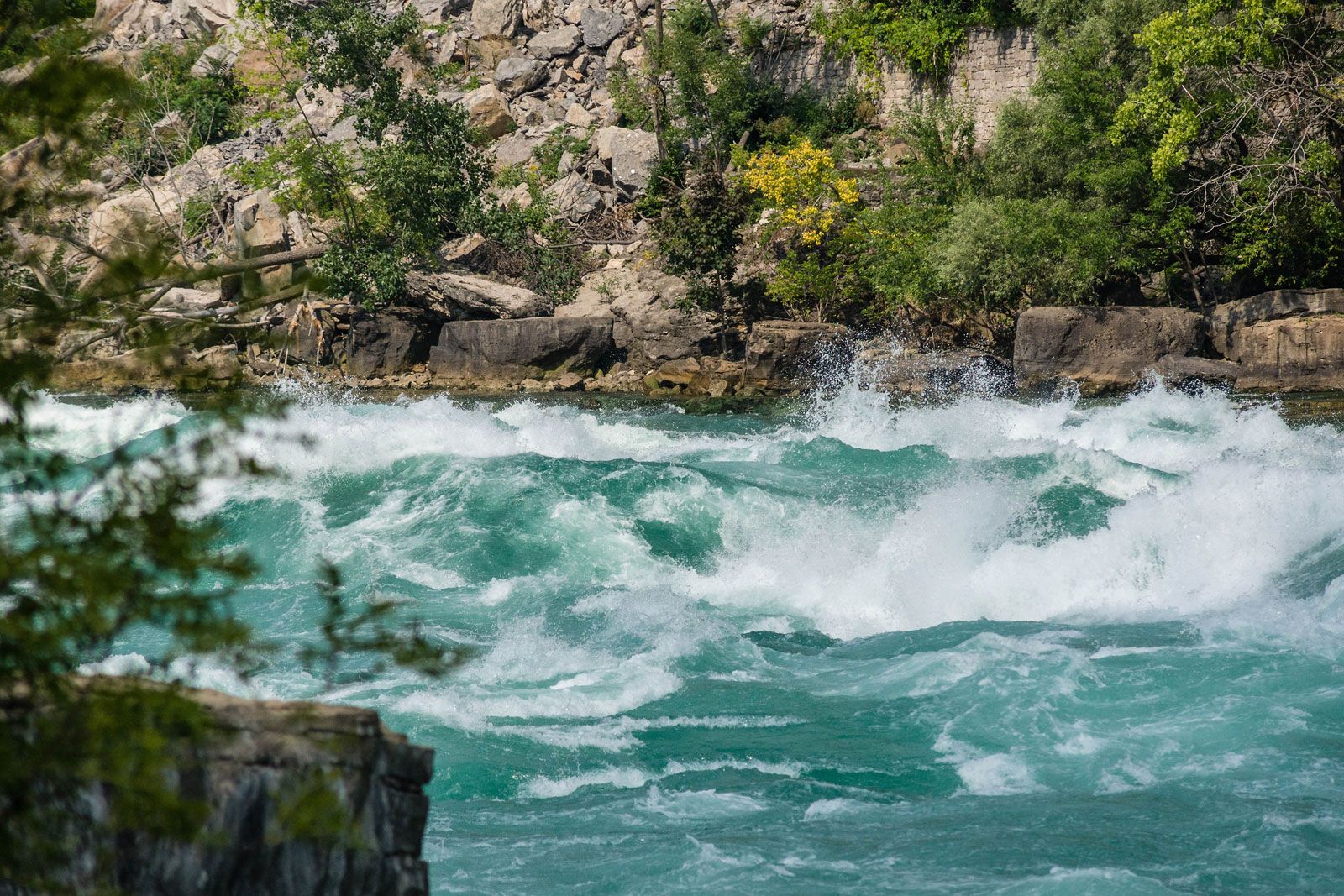
Water is the most plentiful compound on Earth and is essential to life. Although water molecules are simple in structure (H2O), the physical and chemical properties of water are extraordinarily complicated.
The hydrologic cycle is a continuous process powered by sunlight and gravity that circulates water throughout the Earth-atmosphere system.12
Key Processes
- Evaporation and Transpiration: Water transitions from a liquid to a gaseous state, entering the atmosphere as water vapour. This occurs primarily through evaporation from oceans and land surfaces, as well as transpiration, where plants release water vapour through their leaves.134
- Condensation: As moist air cools, water vapour condenses into tiny droplets or ice crystals, forming clouds. This process is often driven by vertical atmospheric movements.15
- Precipitation: When these droplets or crystals coalesce and become heavy enough, they fall to Earth’s surface as precipitation, such as rain, snow, or hail.15
- Runoff and Infiltration: Water that reaches the surface may become runoff, flowing into streams, rivers, and lakes. Alternatively, it may infiltrate the soil to become groundwater, which moves through aquifers under the pull of gravity before eventually returning to the ocean to restart the cycle.1