
Britannica
Sources used in this answer
How does the structure of graphene differ from the structure of diamond?
Created from Britannica articles
using AI.
AI can make mistakes, so verify using Britannica articles.
graphene
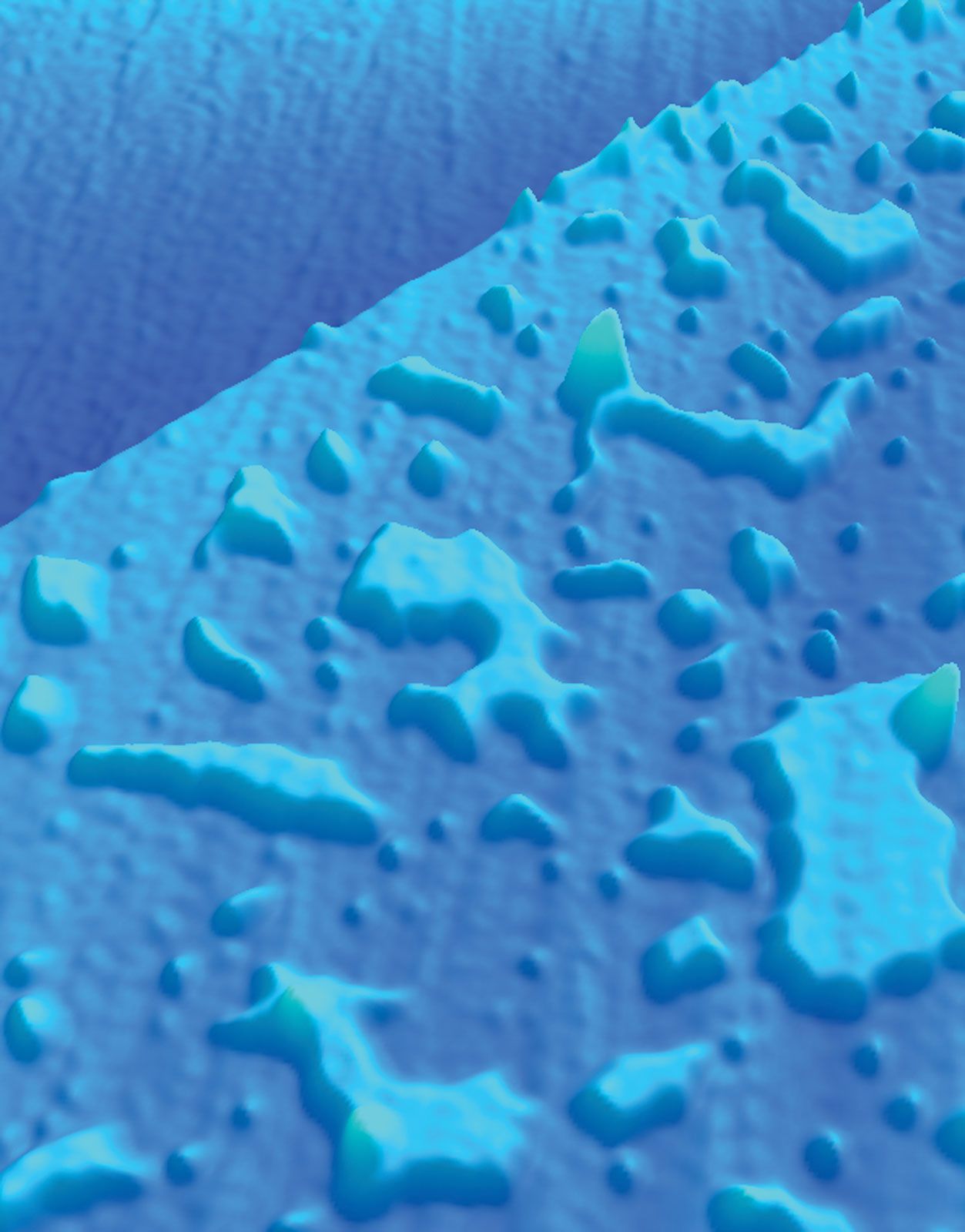
Atomic force microscopy image of water structures that were trapped beneath a sheet of graphene one atom thick.
The primary difference between the structures of graphene and diamond lies in their dimensionality and atomic bonding arrangements.
- Graphene: This material consists of a single, two-dimensional layer of carbon atoms arranged in a honeycomb or hexagonal lattice. Within this layer, each carbon atom is bonded to three others, creating a flat, sheet-like structure that extends infinitely in two dimensions.12
- Diamond: In contrast, diamond is an infinite, three-dimensional crystal structure. Each carbon atom is covalently bonded to four other carbon atoms at the corners of a tetrahedron. This dense, three-dimensional tetrahedral arrangement results in a highly compact structure, which contributes to diamond's extreme hardness and insulating properties.1
While graphene is a single-layer, two-dimensional material, diamond is a three-dimensional network of carbon atoms. This fundamental difference in geometry and bonding explains why these two allotropes of carbon exhibit such distinct physical and chemical characteristics.1