
How does the Tyndall effect create blue coloration in animals?
In biology, the Tyndall effect is a physical process that produces blue coloration in many animals through the scattering of light. This phenomenon occurs when incident light strikes finely dispersed particles—such as small protein or lipid globules, or tiny air vesicles—that are situated above a dark layer of pigment, typically melanin.1
These scattering particles are approximately the same size as the shorter wavelengths of light (about 0.4 microns). When light hits these structures, the longer wavelengths (red, orange, and yellow) pass through the medium and are absorbed by the underlying dark pigment. Conversely, the shorter blue and violet waves encounter these particles and are reflected back, creating the appearance of blue color.1
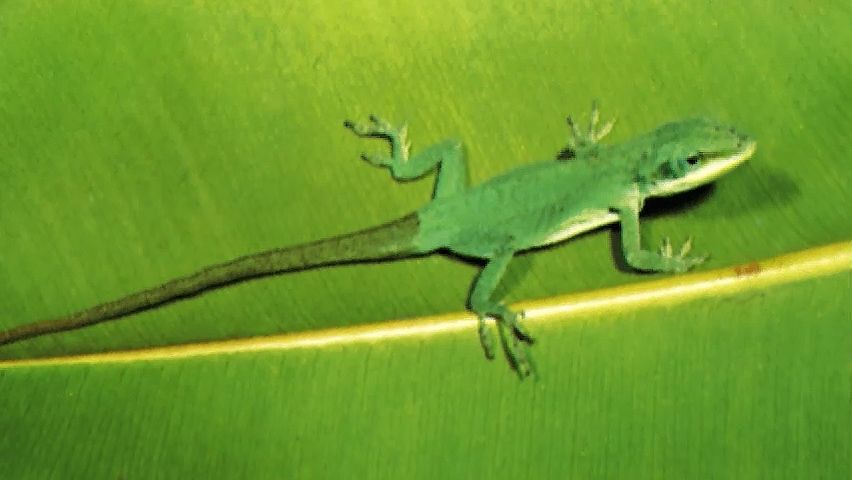
This structural color is often combined with other pigments to produce different hues. For example, many green colors in the skin of reptiles, amphibians, and birds are not caused by green pigments, but rather by the scattering of blue light as it passes through an overlying layer of yellow pigment. If the yellow pigment is removed, the structure appears blue.1