
Britannica
Sources used in this answer
How does the Betterton-Kroll process separate bismuth from lead?
Created from Britannica articles
using AI.
AI can make mistakes, so verify using Britannica articles.
bismuth
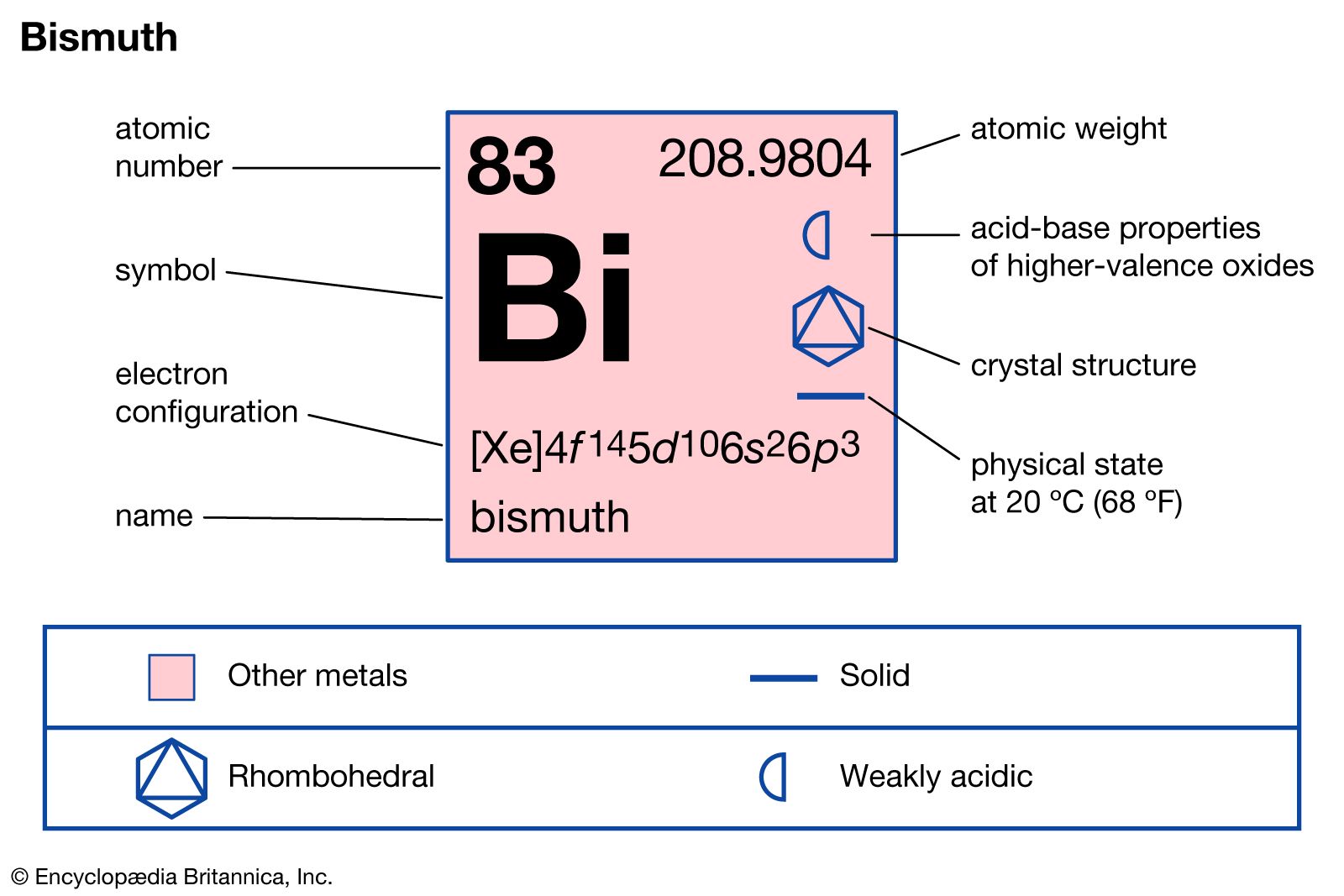
Properties of bismuth.
The Betterton-Kroll process, also known as the Asarco process, is a pyrometallurgical method used to remove bismuth from lead bullion.12
The process functions through the following steps:
- Addition of Reagents: Calcium and magnesium are added to a molten lead-bismuth bath.1
- Compound Formation: The bismuth reacts with these metals to form compounds that possess higher melting points and lower densities than the surrounding molten lead.12
- Separation: Because these compounds are lighter than lead, they rise to the surface of the melt, where they are removed as a solid dross.12
- Recovery: The bismuth can subsequently be recovered from the skimmed calcium-magnesium compounds by treatment with chlorine.1
This method is typically employed after the lead has undergone softening, desilvering, and dezincing, and it is capable of producing refined lead with bismuth levels between 0.005 and 0.01 percent.2