
Britannica
Sources used in this answer
How does moderate sunburn compare with a first-degree burn?
Created from Britannica articles
using AI.
AI can make mistakes, so verify using Britannica articles.
burn
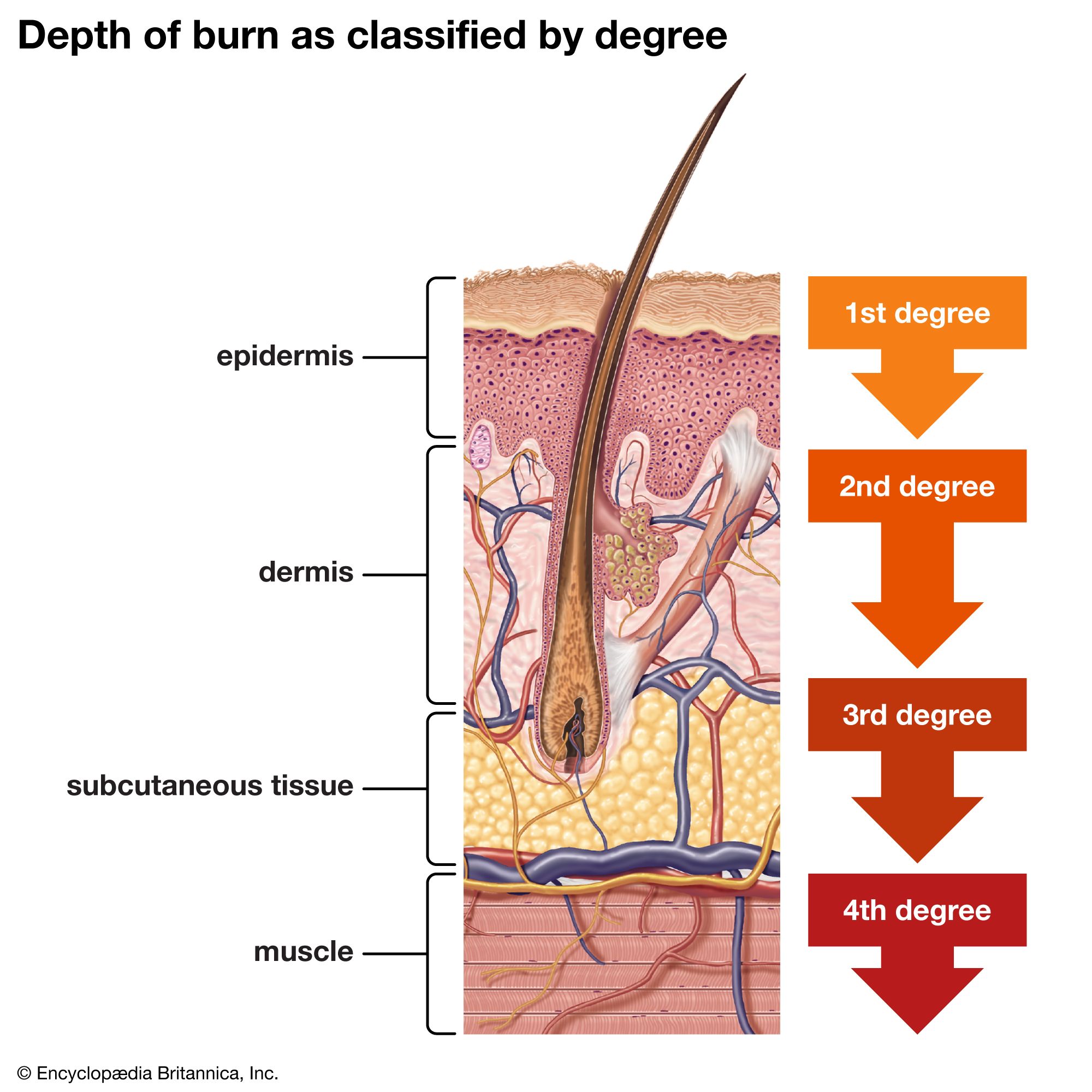
This diagram shows how burn injuries are classified by severity. First-degree burns damage the outer skin, known as the epidermis. First-degree burns are the least severe form of burn injury. Second-degree burns damage the outer skin and some of the underlying skin, known as the dermis, which also includes some connective tissue. Third-degree burns damage all the layers of skin, including subcutaneous tissue. Fourth-degree burns, which are the most severe, destroy every layer of skin and also damage muscle, tendons, and bones.
A moderate sunburn is not just similar to a first-degree burn; it is a classic example of one.1
Physicians categorize burns based on the depth of tissue damage. A first-degree burn is defined as an injury that affects only the epidermis, the outermost layer of the skin. These injuries are characterized by redness, pain, and heat, but they do not exhibit blistering or tissue charring.12
Because a moderate sunburn involves this same level of superficial damage to the epidermis, it is clinically classified as a first-degree burn. While sunburns can sometimes progress to more severe stages if they involve blistering or edema, a moderate case remains within the parameters of a first-degree injury.13