
How does light interference in silicon dioxide make graphene easier to see?
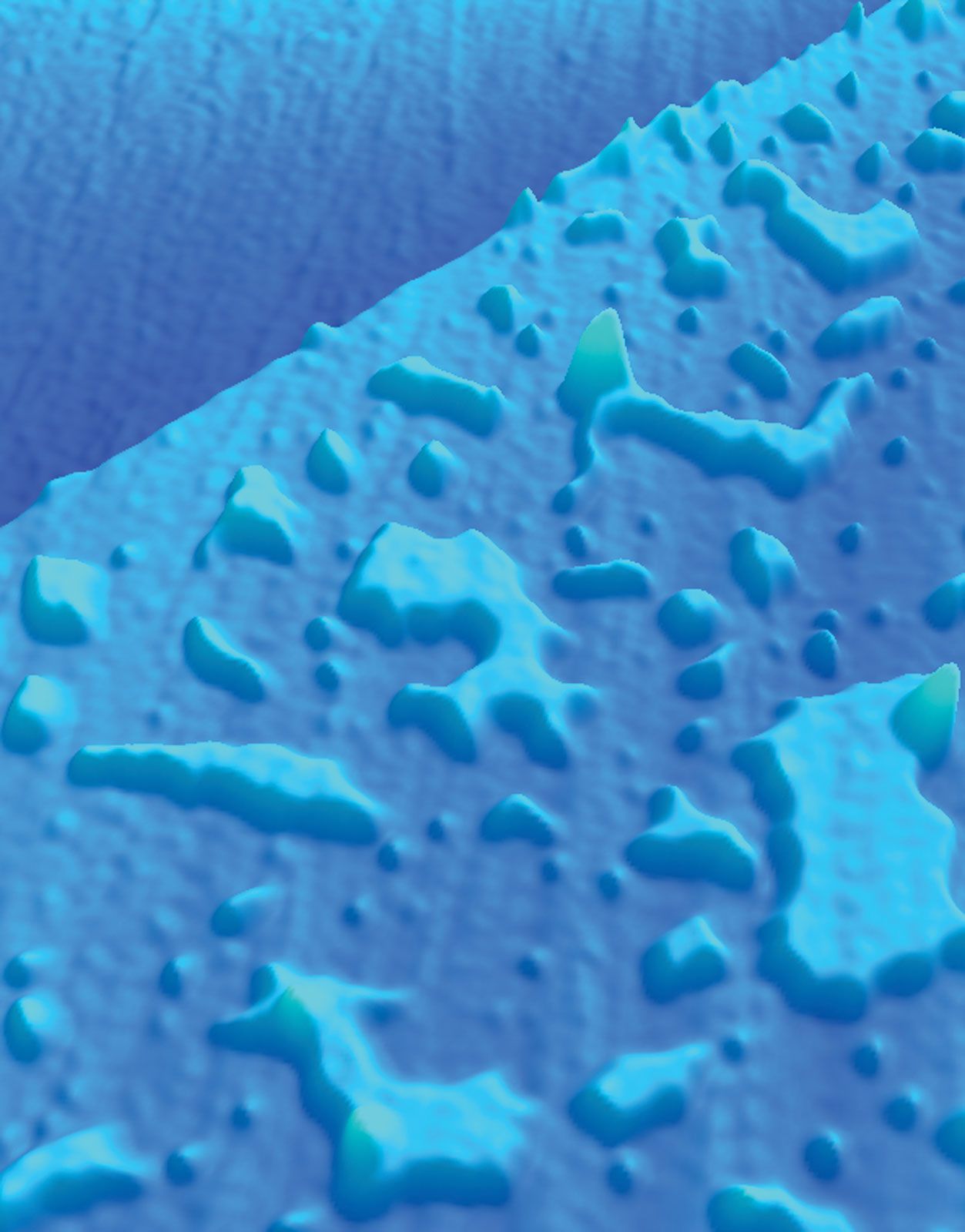
The visibility of graphene on a silicon substrate covered by a thin layer of silicon dioxide is significantly enhanced by optical interference phenomena.1
When graphene is placed on this substrate, the silicon dioxide layer acts similarly to other thin films—such as oil on water or a soap film—where light waves reflecting off the top and bottom surfaces of the film interfere with one another. This interference effect creates an optical contrast that makes the atomically thin graphene flakes visible under a standard optical microscope.1
This visibility is further supported by the fact that electrons in graphene interact strongly with photons in visible light, causing each atomic layer to absorb approximately 2.3 percent of the light's intensity. Together, these factors allow researchers to identify and study graphene flakes that would otherwise be too thin to see.1