
Britannica
Sources used in this answer
How does cholera spread through contaminated water?
Created from Britannica articles
using AI.
AI can make mistakes, so verify using Britannica articles.
cholera
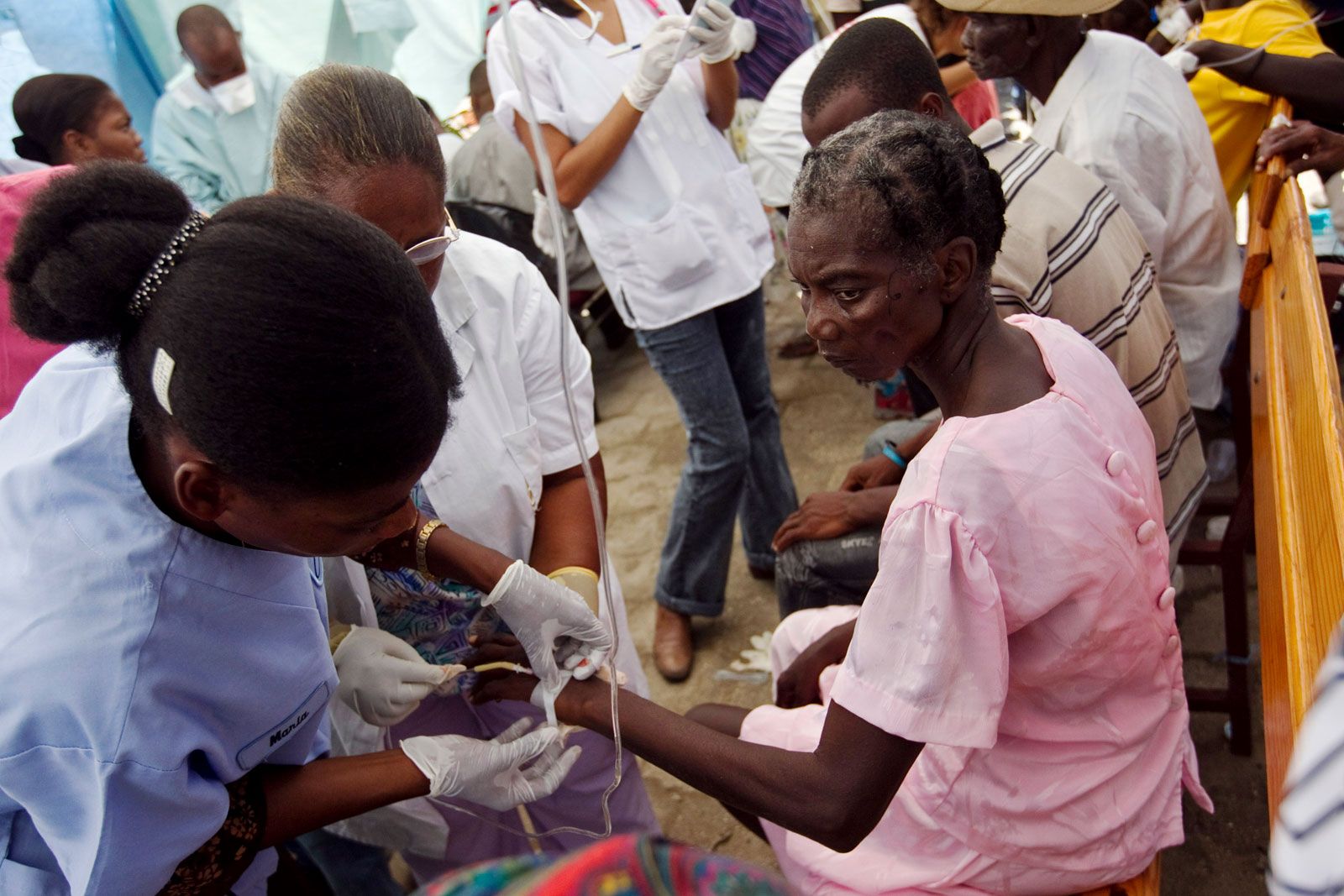
A woman with cholera being treated by nurses at St. Nicholas Hospital in Saint-Marc, Haiti, 2010.
Cholera is an intestinal disease that serves as the archetype of waterborne illnesses. It spreads through the fecal-oral route, which occurs when feces containing the bacterium Vibrio cholerae contaminate a water supply that is subsequently ingested by individuals.1
The transmission process is facilitated by the following factors:
- Environmental Persistence: Certain strains, such as the El Tor biotype, are hardy organisms capable of surviving for long periods in aquatic environments.1
- Contaminated Food: The disease can also spread through food that has been irrigated, washed, or cooked with contaminated water. High-risk items include raw shellfish and seafood, fruits and vegetables grown in soil fertilized with human excrement, and food packed in contaminated ice.1
- Human Carriers: Individuals who are infected—even those with mild or no symptoms—can shed the bacteria in their feces, further contaminating water sources and spreading the disease through travel and poor sanitation.1
Ensuring access to a safe, clean water supply and implementing hygienic disposal of human waste are the most critical measures for preventing the spread of this disease.2