
Britannica
Sources used in this answer
How does changing the air intake on a Bunsen burner change its flame?
Created from Britannica articles
using AI.
AI can make mistakes, so verify using Britannica articles.
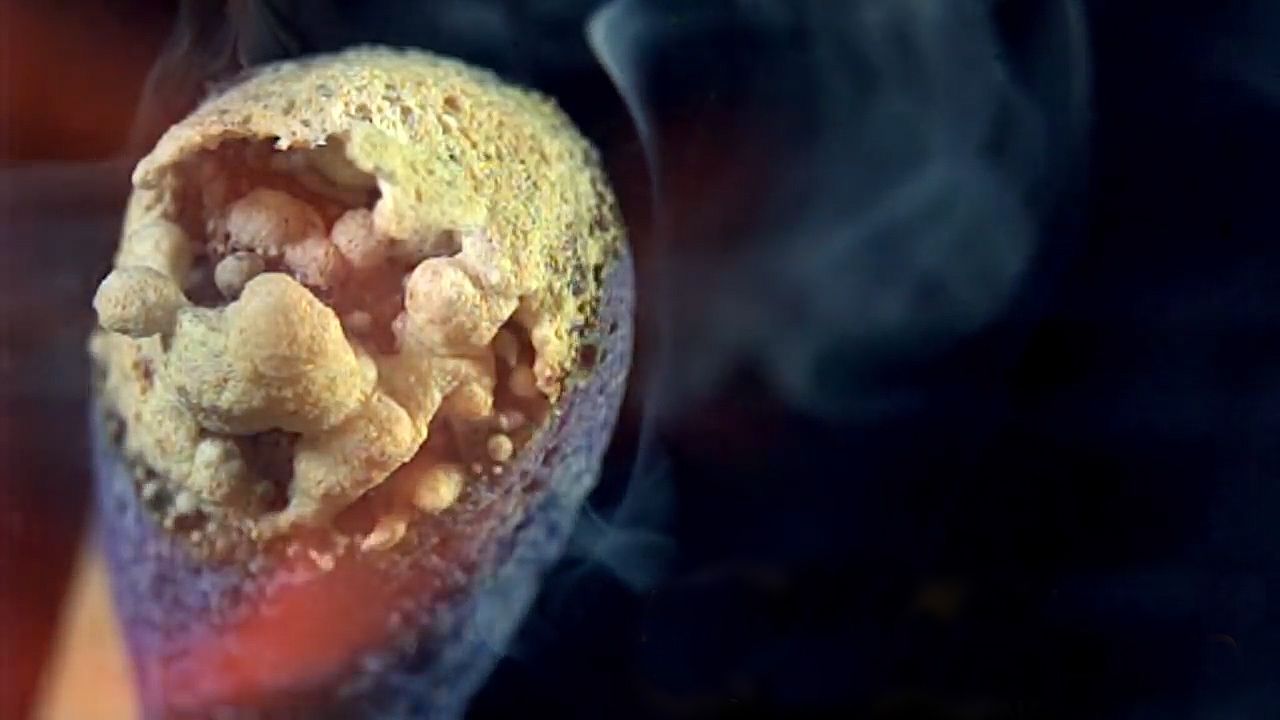
combustion
Learn about the chemistry of lighting a match.
Changing the air intake on a Bunsen burner directly regulates the efficiency of combustion, which alters the flame's appearance and temperature:
- Too little air: The gas does not burn completely, leading to the formation of tiny carbon particles. These particles become incandescent when heated, causing the flame to appear luminous (yellow/orange).1
- Optimal air: With an ideal mixture—typically about 1 part gas to 3 parts air—the burner produces a hotter, pale blue flame. This consists of a primary inner cone and a secondary, almost colorless outer cone where remaining gas is fully oxidized.1
- Too much air: If the air intake is excessive, the flame may "strike back," meaning it begins to burn inside the burner tube rather than at the top.1
By adjusting the collar to control the air supply, you manage the chemical reaction to achieve the desired heat intensity, which can reach approximately 1,500 °C (2,700 °F) at the hottest point just above the primary flame.1