
Britannica
Sources used in this answer
How does a fourth-degree burn affect muscles and bones?
Created from Britannica articles
using AI.
AI can make mistakes, so verify using Britannica articles.
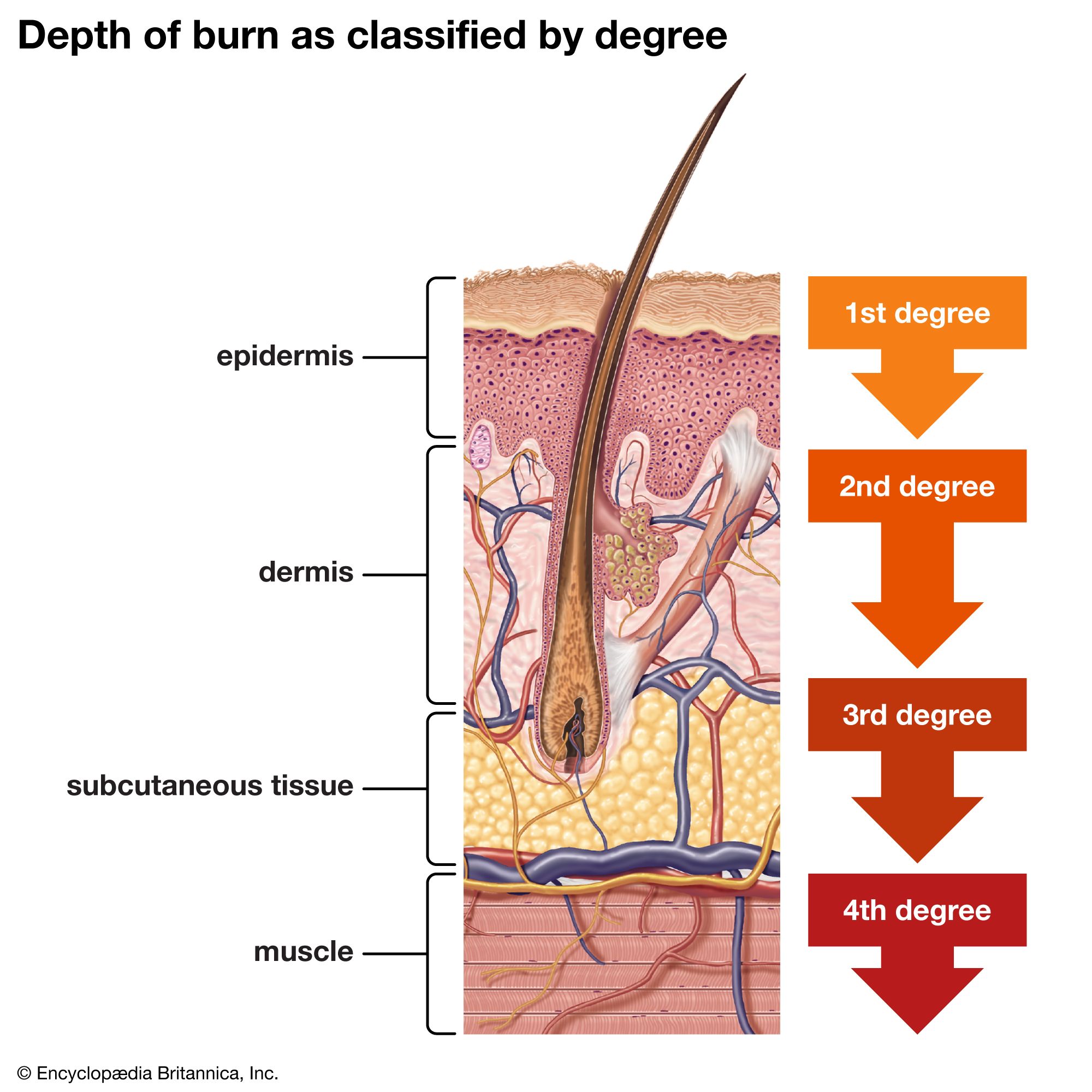
burn
This diagram shows how burn injuries are classified by severity. First-degree burns damage the outer skin, known as the epidermis. First-degree burns are the least severe form of burn injury. Second-degree burns damage the outer skin and some of the underlying skin, known as the dermis, which also includes some connective tissue. Third-degree burns damage all the layers of skin, including subcutaneous tissue. Fourth-degree burns, which are the most severe, destroy every layer of skin and also damage muscle, tendons, and bones.
Fourth-degree burns, also known as char or black burns, are severe injuries that extend beyond the skin and subcutaneous tissue to damage deeper structures, including muscle, fascia, and bone.1
These injuries are characterized by the following:
- Tissue Destruction: Unlike full-thickness (third-degree) burns that are limited to the skin, fourth-degree burns involve the destruction of underlying muscle and bone tissue.1
- Systemic Impact: The deep nature of these burns can lead to the release of toxic materials into the bloodstream, which poses a grave prognosis for the patient.1
- Treatment: If a fourth-degree burn affects only a small portion of the body, surgeons may excise the damaged area down to healthy tissue. However, if the injury involves an extremity, amputation may be necessary to manage the severity of the damage.1