
Britannica
Sources used in this answer
How does Canada’s trans-fat-free labeling standard differ from the United States standard?
Created from Britannica articles
using AI.
AI can make mistakes, so verify using Britannica articles.
Trans fat
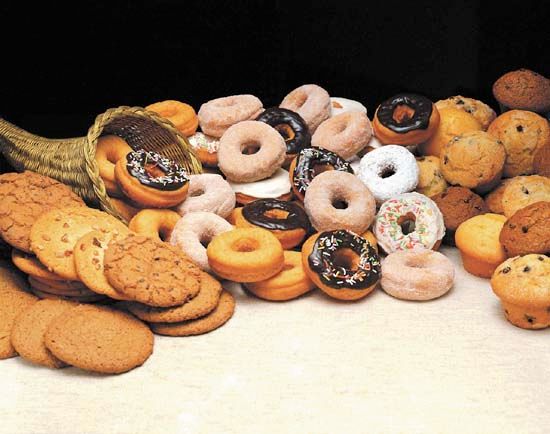
Commercially manufactured foods, including cookies, doughnuts, and muffins, often contain trans fats.
The labeling standards for "trans-fat-free" food products differ between Canada and the United States based on the maximum allowable trans fat content per serving:
- United States: A food product may be labeled "trans-fat-free" if it contains less than 0.5 grams of trans fat per serving.1
- Canada: A food product must contain less than 0.2 grams of trans fat per serving to qualify for this labeling.1
Both countries require manufacturers to list trans fat content on the nutrition facts panels of prepackaged foods. Because trans fats are linked to increased risks of heart disease, atherosclerosis, and type II diabetes, health experts generally recommend avoiding manufactured products containing these fats entirely.1