
Britannica
Sources used in this answer
How do water molecules differ in ice, liquid water, and water vapor?
Created from Britannica articles
using AI.
AI can make mistakes, so verify using Britannica articles.
water
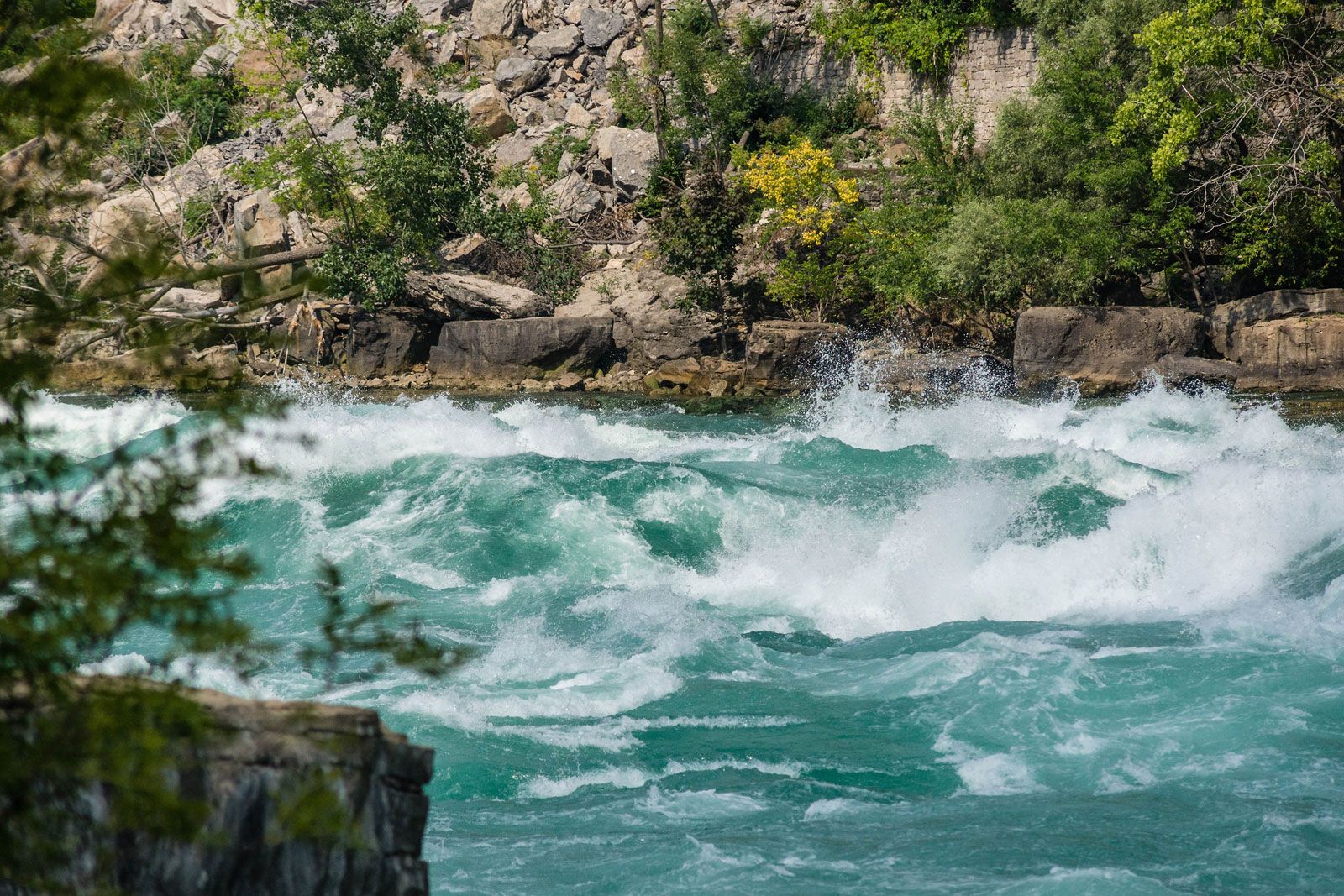
Water is the most plentiful compound on Earth and is essential to life. Although water molecules are simple in structure (H2O), the physical and chemical properties of water are extraordinarily complicated.
The water molecule, with the chemical formula , consists of two hydrogen atoms covalently bonded to one oxygen atom. While the individual molecule remains the same, its behavior and arrangement differ significantly across the three states of matter due to hydrogen bonding.1
- Solid (Ice): Water molecules interact strongly, forming an ordered, rigid crystalline lattice. Each oxygen atom collects its four nearest neighbors, creating an open structure that is less dense than liquid water.1
- Liquid: Most molecules are associated in a polymeric structure, consisting of chains connected by weak hydrogen bonds. Thermal agitation causes these bonds to constantly break and reform, allowing the molecules to remain closely packed.1
- Gaseous (Water Vapor): Molecules are largely independent and monomeric, meaning they exist mostly as single molecules. Interactions between them are slight and occur only during collisions.1
These differences in molecular configuration and intermolecular interaction are the primary reasons for water's unique physical properties, such as why ice is less dense than liquid water and floats.1