
How do the A and B sublattices make up graphene’s honeycomb lattice?
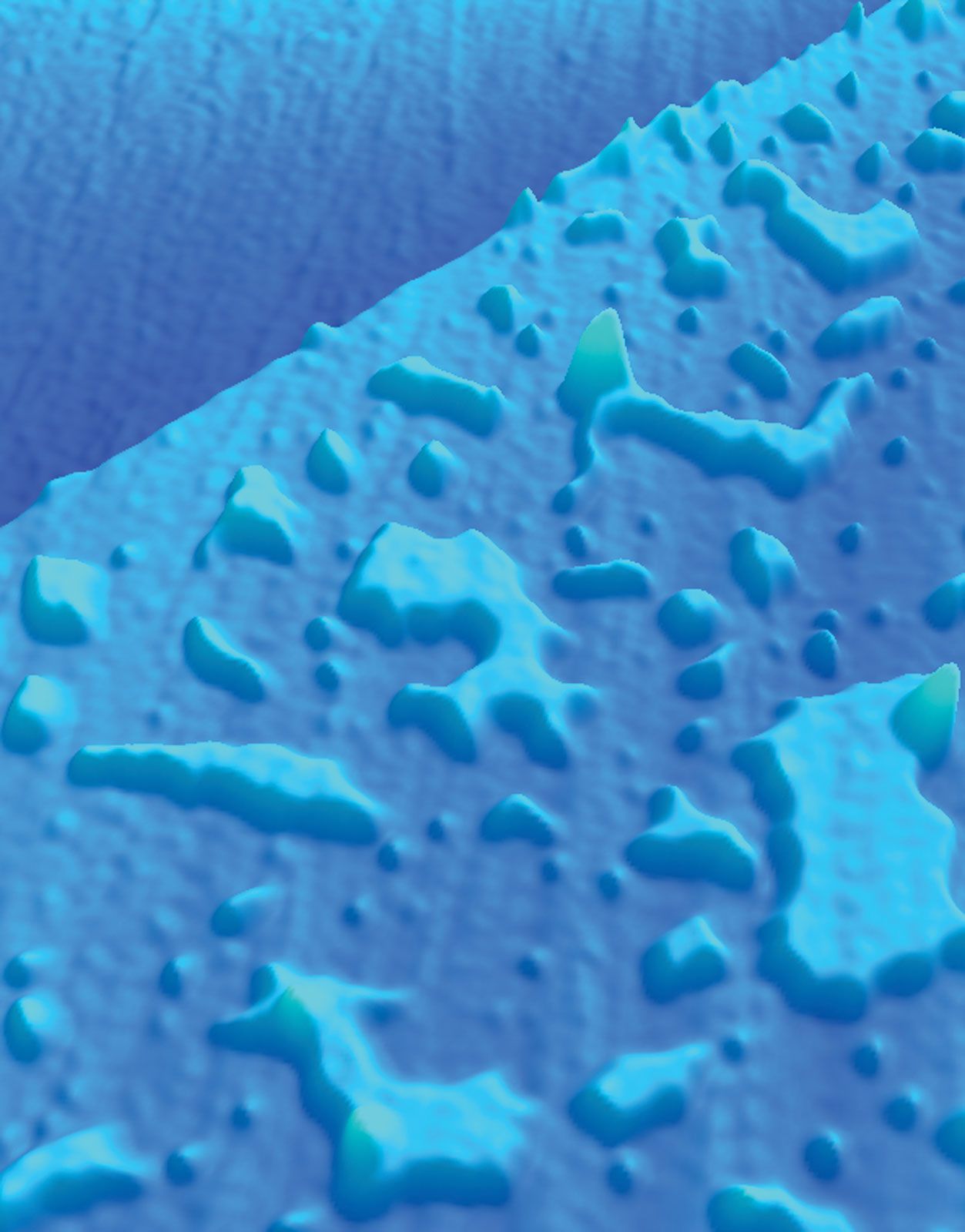
The honeycomb lattice of graphene is composed of two distinct sublattices, identified as A and B. These sublattices are arranged such that every individual carbon atom in sublattice A is surrounded by three atoms belonging to sublattice B, and conversely, every atom in sublattice B is surrounded by three atoms from sublattice A.1
This specific geometric configuration is fundamental to the material's unique electronic properties. It gives rise to an internal degree of freedom for charge carriers known as pseudospin, which functions similarly to the spin of subatomic particles. Because of this arrangement, electrons and holes in graphene behave like relativistic quantum particles, allowing the material to serve as a valuable test bed for studying high-energy physics phenomena, such as the Klein paradox, within a condensed matter system.1