
Britannica
Sources used in this answer
How do rhodopsin and porphyropsin help eyes detect light?
Created from Britannica articles
using AI.
AI can make mistakes, so verify using Britannica articles.
coloration
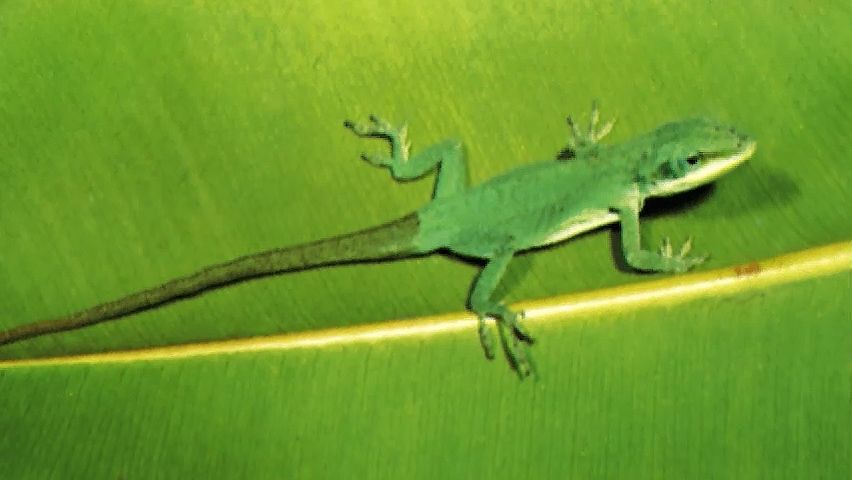
The anole changes color in response to its stress level.
Rhodopsin and porphyropsin are photopigments that enable light detection by converting light energy into electrical signals within the eye. Both consist of a protein called opsin bound to a light-sensitive chromophore derived from vitamin A.1
- Rhodopsin: This pigment uses the chromophore retinal. When it absorbs a photon, the retinal undergoes a configuration change from 11-cis to all-trans, triggering a molecular cascade that leads to the hyperpolarization of the photoreceptor cell. This electrical signal is then transmitted to the brain.123
- Porphyropsin: This family of pigments uses 3-dehydroretinal as its chromophore instead of retinal. Because of this difference, porphyropsins have a spectral sensitivity shifted by approximately 30 nm toward the red end of the spectrum compared to retinal-based pigments using the same opsin.1
In both cases, the absorption of light initiates a photochemical reaction that alters the cell's membrane potential, allowing the organism to perceive light.12