
Britannica
Sources used in this answer
How do pseudopods allow some protozoans to engulf food?
Created from Britannica articles
using AI.
AI can make mistakes, so verify using Britannica articles.
Feeding behaviour
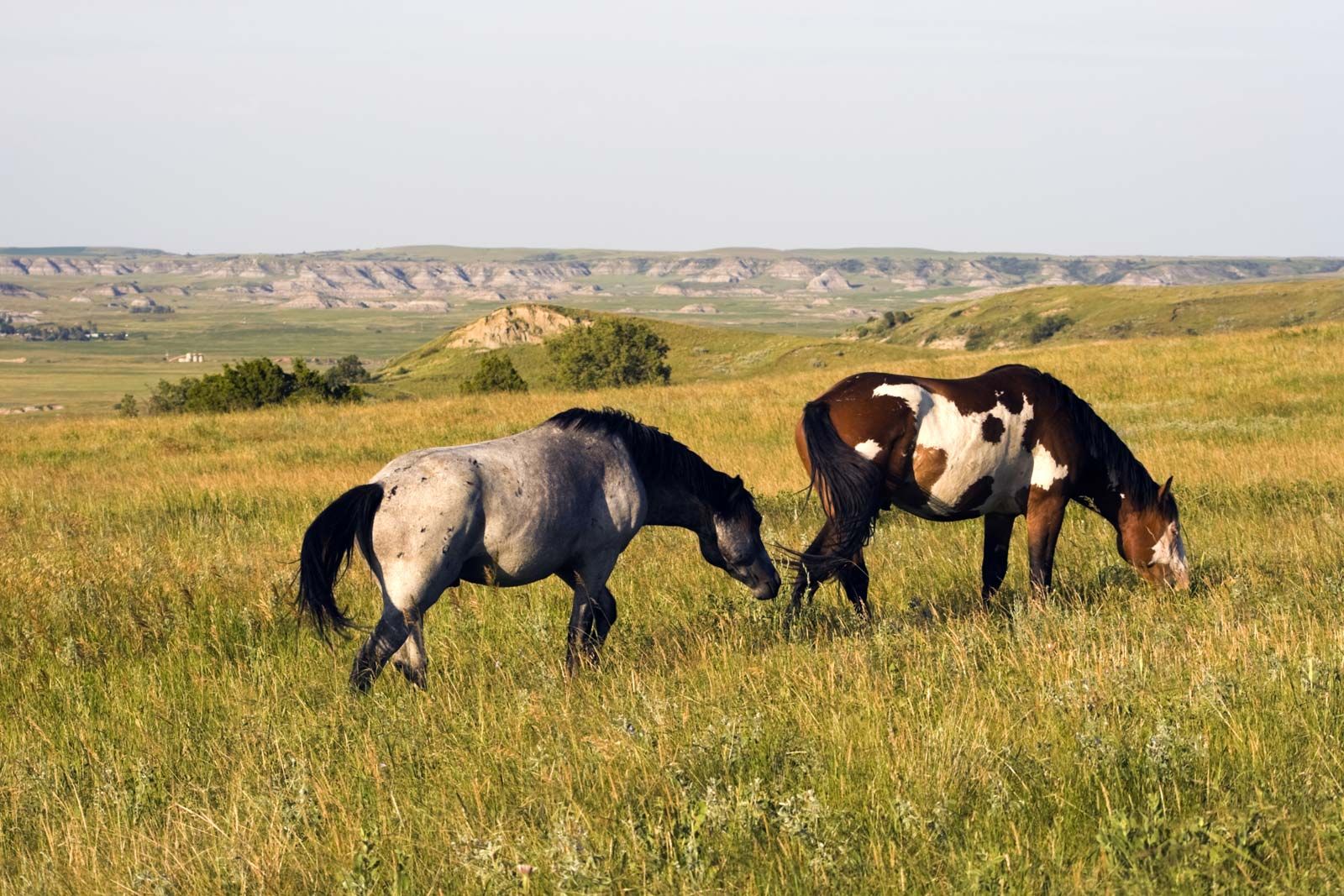
Wild horses graze in the Badlands of North Dakota.
Pseudopodia (false feet) are temporary extensions of the cytoplasm that allow protozoans to capture and ingest food through several specialized mechanisms.12
- Engulfment: In many amoebas, the cytoplasm flows around a food particle, surrounding it completely to form a membrane-bound vacuole where digestion occurs.12
- Trapping: Some protozoans use complex pseudopodial networks to capture prey. For example, foraminiferans use branching reticulopodia to trap food, which is then transported along the filaments to the main cell body for ingestion.13
- Collection: In choanoflagellates, fine pseudopodia located at the base of the flagellum ingest food particles that have been trapped by the organism's collar.3
- Adhesion: Certain types, such as axopodia, are long, sticky, and stiff, functioning as specialized traps that hold prey until it can be processed.1
These diverse strategies allow protozoans to secure nutrients efficiently, even in the absence of a specialized mouth or cytostome.32