
Britannica
Sources used in this answer
How do greenhouse gases affect the boundaries of a star’s habitable zone?
Created from Britannica articles
using AI.
AI can make mistakes, so verify using Britannica articles.
extraterrestrial life
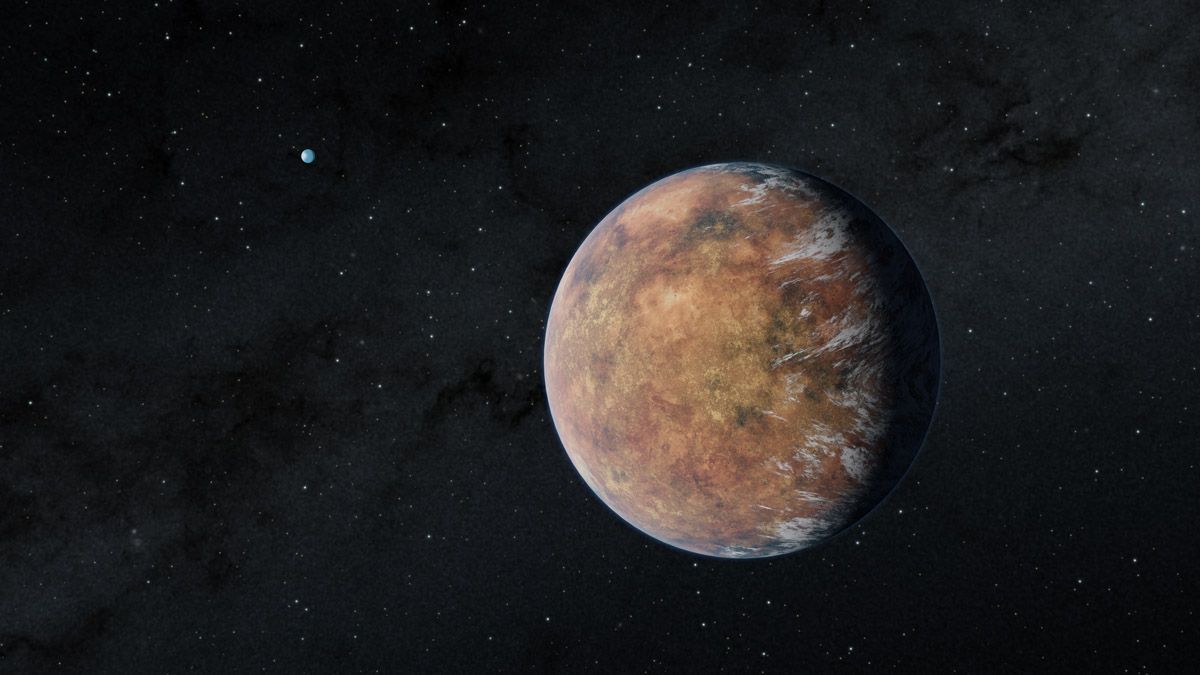
An illustration of the Earth-size planet TOI 700e orbiting within the habitable zone of its star. The habitable zone is the area around a star where liquid water, and thus possibly life, can survive on a planet's surface. Its Earth-size sibling, TOI 700d, can be seen in the distance.
In the context of astrobiology, greenhouse gases play a critical role in defining the boundaries of a star’s habitable zone by regulating a planet's surface temperature.
- Inner Boundary: This limit is defined by the runaway greenhouse effect. As a planet moves closer to its star, greenhouse gases trap increasing amounts of infrared radiation. Eventually, this process causes the planet to become so hot that its surface water boils away, rendering the environment inhospitable.
- Outer Boundary: This limit is reached where greenhouse warming is insufficient to maintain surface temperatures above freezing. In these colder, more distant regions, the presence of greenhouse gases—such as carbon dioxide, methane, and ammonia—is essential to trap enough heat to keep water in a liquid state.
Essentially, by modulating the retention of heat, these gases expand the range of distances from a star where a planet can potentially support liquid water and, by extension, life.1