
Britannica
Sources used in this answer
How do generalist feeders reduce the risk of starvation?
Created from Britannica articles
using AI.
AI can make mistakes, so verify using Britannica articles.
Feeding behaviour
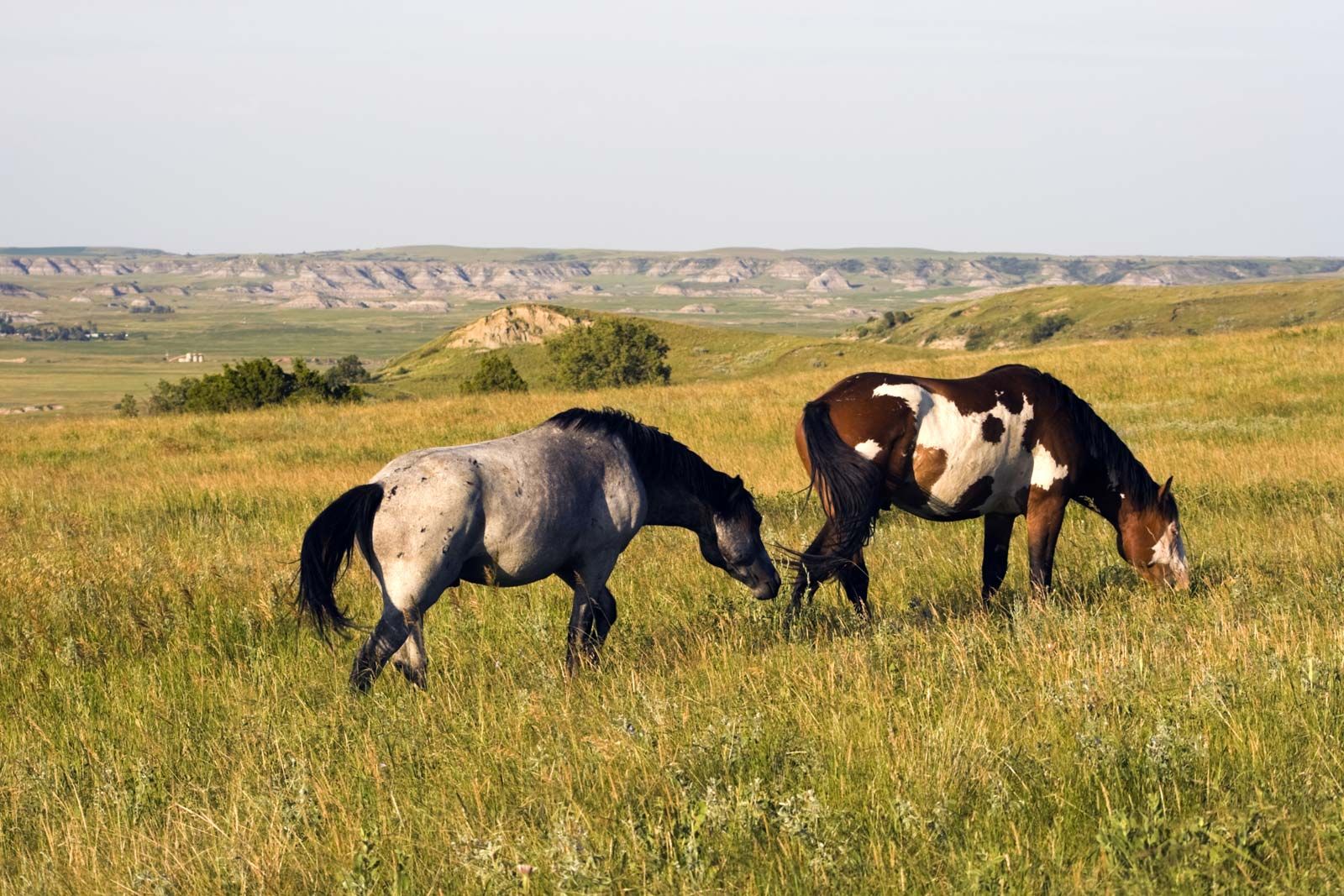
Wild horses graze in the Badlands of North Dakota.
Generalist feeders, such as the herring gull, reduce the risk of starvation by exploiting a broad range of food sources rather than relying on a single type of prey or nutrient. By maintaining a diverse diet, these animals ensure that they are not dependent on the availability of any one specific food item, making it highly unlikely that all their potential food sources will become exhausted at the same time.1
In addition to dietary breadth, animals may manage the risk of food shortages through other physiological and behavioral adaptations:
- Energy Reserves: Many species store energy in the form of body fat in anticipation of predictable food shortages or increased metabolic demands, such as before migration or hibernation.2
- Extracorporeal Hoarding: Some animals, like the hamster, mitigate the risk of scarcity by storing food in external caches.2
- Metabolic Adjustment: During periods of temporary starvation, some selective feeders can undergo a significant reduction in their metabolic rate to better align with limited food intake.3