
How do electrons and holes in graphene resemble particles and antiparticles in quantum electrodynamics?
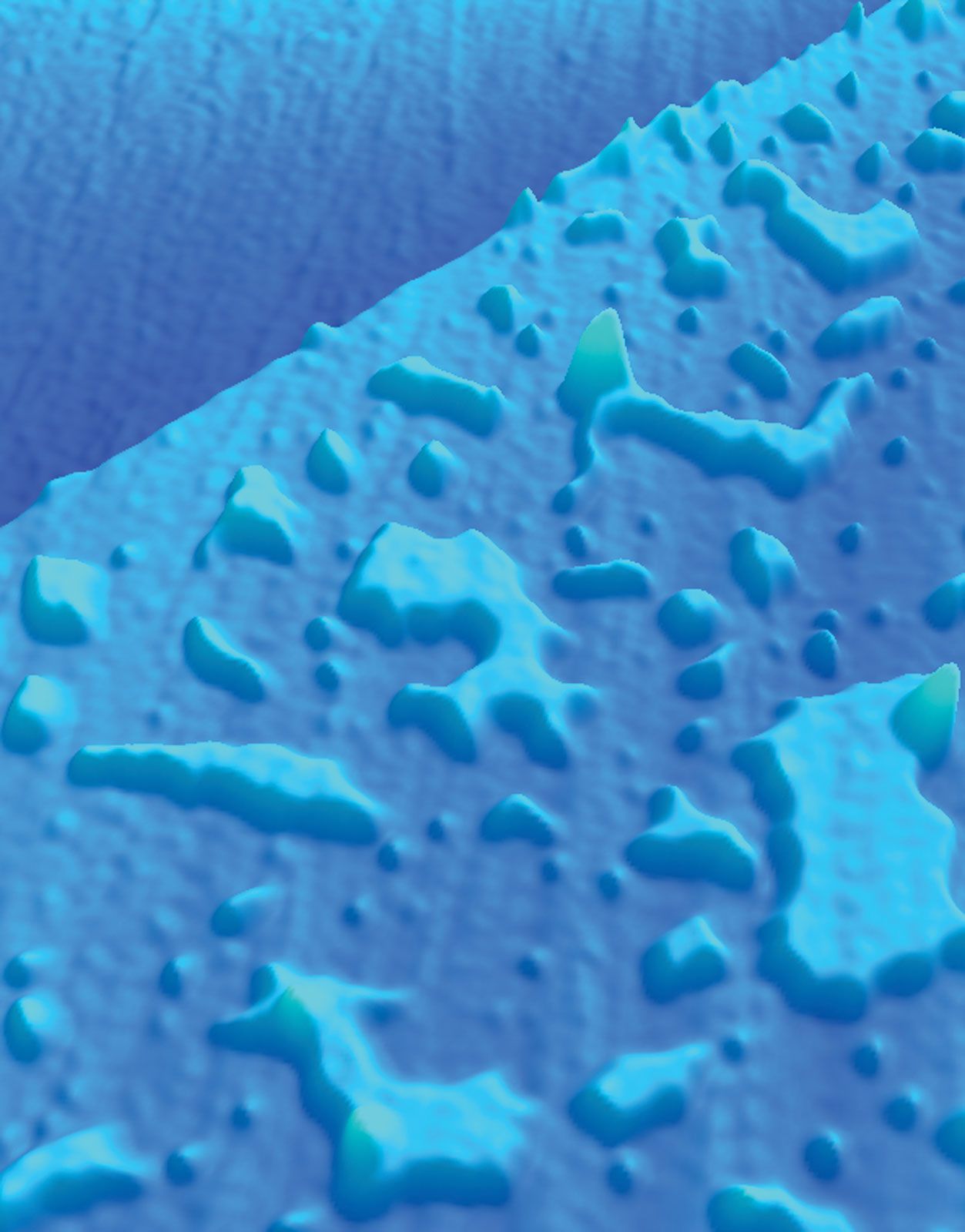
In graphene, the honeycomb lattice structure—composed of two sublattices (A and B)—gives rise to an internal degree of freedom known as pseudospin, which mimics the spin of subatomic particles.1
Within this framework, electrons and holes in graphene behave similarly to particles and antiparticles (such as electrons and positrons) in quantum electrodynamics. This analogy is supported by the fact that the charge-carrier states in graphene resemble those of ultra-relativistic quantum particles.1
Because these electrons and holes move at a velocity significantly lower than the speed of light—approximately 1/300th of it—graphene serves as an accessible test bed for studying quantum relativistic effects that are otherwise difficult to observe in high-energy physics experiments. This allows researchers to study phenomena like the Klein paradox, where particles penetrate energy barriers that would typically be impassable, providing a vital bridge between materials science and fundamental quantum mechanics.1