
Britannica
Sources used in this answer
How do blowflies regulate the timing of their meals?
Created from Britannica articles
using AI.
AI can make mistakes, so verify using Britannica articles.
Feeding behaviour
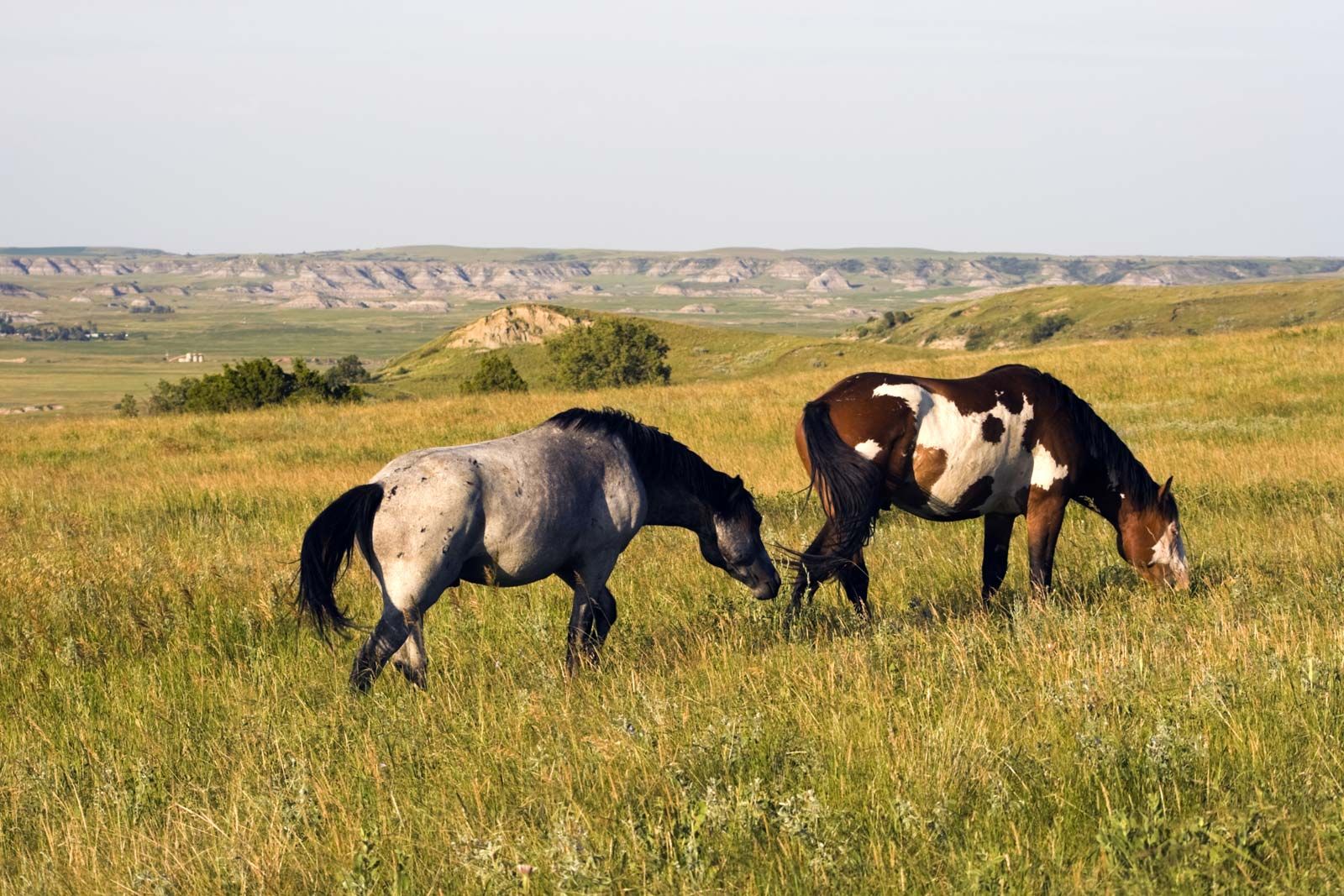
Wild horses graze in the Badlands of North Dakota.
Blowflies, such as Phormia regina, regulate the timing of their meals through a feedback mechanism that balances food intake with caloric expenditure.1
The process functions as follows:
- Initiation: Sucking is triggered when food stimuli contact taste organs located on the proboscis and the tarsi (the terminal sections of the legs).1
- Threshold Modulation: The sucking response is controlled by a threshold that is modulated by signals from the digestive tract and body fluids. As long as food is present in the foregut, distension receptors send signals that raise this threshold, inhibiting further feeding.1
- Storage and Emptying: Excess food taken during a meal is stored in the crop. The foregut remains filled as food is gradually released from the crop. The threshold for feeding remains high until the crop is completely voided.1
- Nutritional Balance: The rate at which the crop empties is directly linked to the nutrient concentration of the body fluids, which depends on the balance between gut absorption and metabolic uptake. Consequently, the more energy the fly expends, the sooner the crop empties, lowering the threshold and allowing the fly to resume feeding.1