
How did the 2010 Haiti earthquake contribute to the spread of cholera?
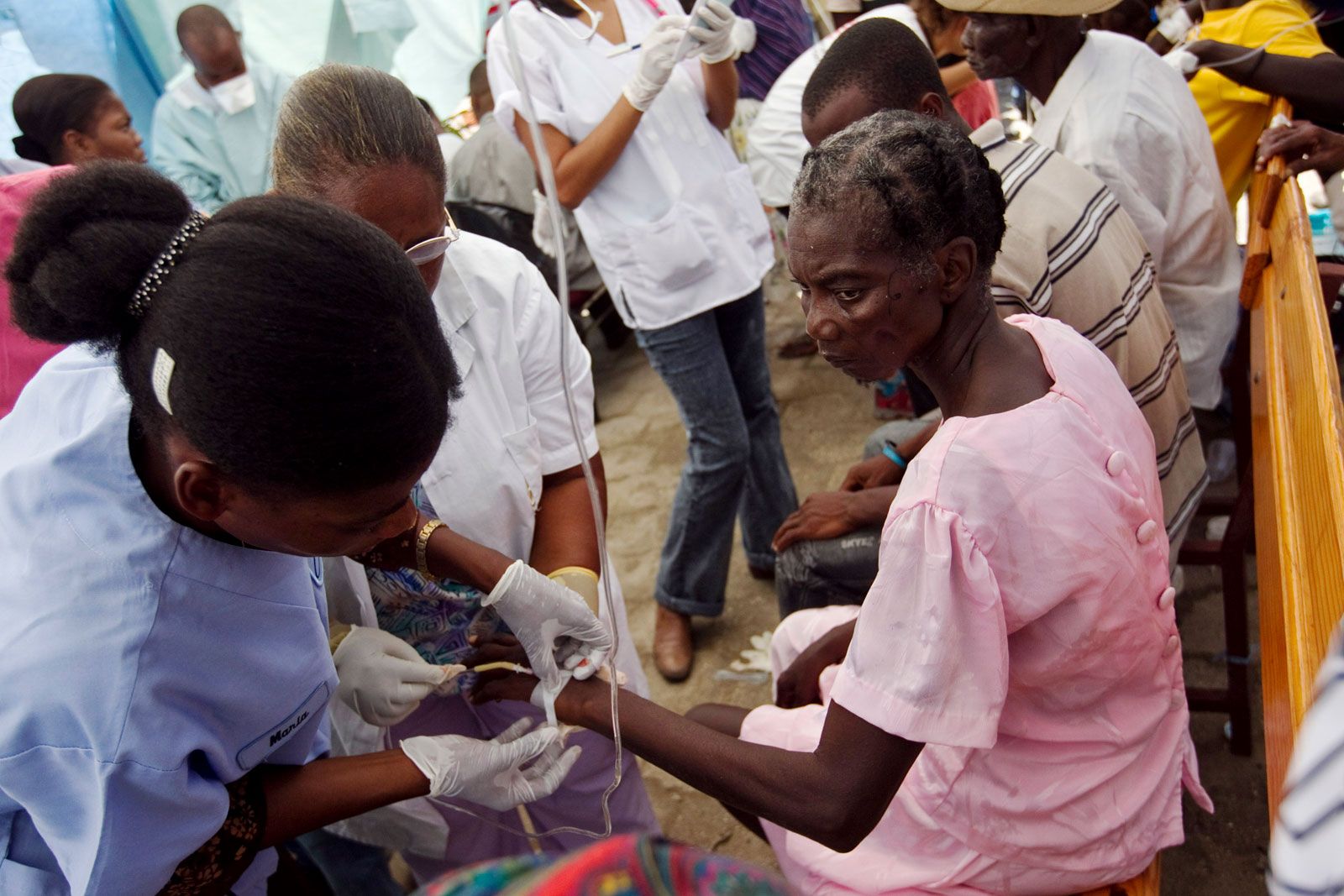
The 2010 Haiti earthquake created conditions that facilitated the rapid spread of cholera by exacerbating existing infrastructure vulnerabilities and sanitation challenges.
Following the disaster, the introduction of a South Asian strain of the Vibrio cholerae bacterium—linked to UN peacekeeping forces—occurred in an environment where fecal matter contaminated the Artibonite River, a primary source of drinking water for the region. The earthquake had left over one million people homeless, forcing survivors into crowded, unsanitary tent settlements that lacked adequate water and waste-management systems.123
These conditions, combined with the destruction of hospitals and a general lack of resources, made it difficult to contain the outbreak. The disease quickly spread from the Artibonite province to the tent cities of Port-au-Prince and eventually across the entire country and into the Dominican Republic. This tragedy highlights the critical importance of maintaining robust sanitation infrastructure to protect public health, especially in the wake of natural disasters.231