
How did failures in Zimbabwe’s water and sewage systems increase cholera transmission?
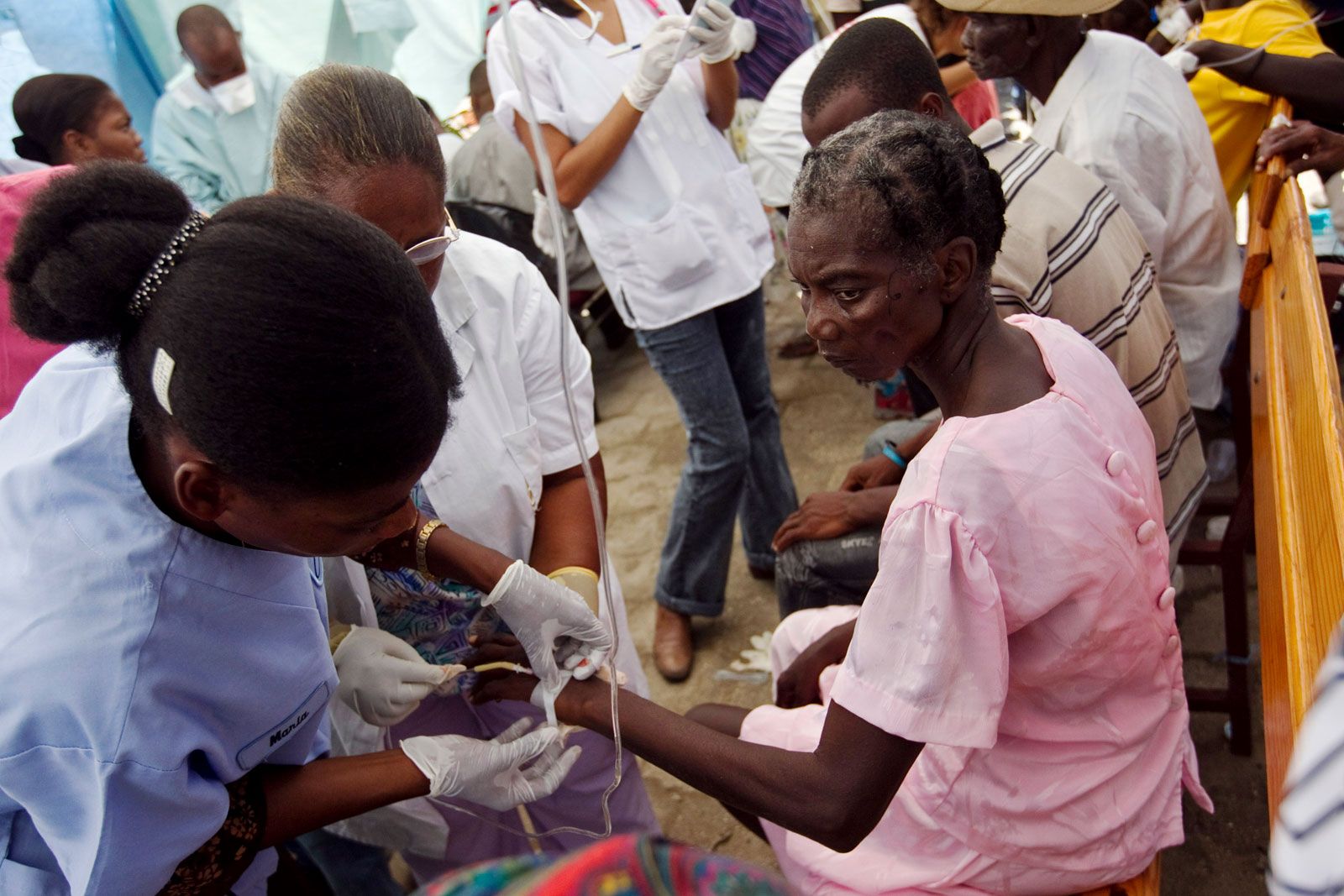
During the 2008–09 cholera epidemic in Zimbabwe, the collapse of water and sewage infrastructure was a primary driver of disease transmission. As the country faced economic instability, the supply of water-purification chemicals was exhausted by early December 2008, forcing many residents to rely on unsafe, contaminated water sources.1
In urban centers like Harare, the failure of sewage systems resulted in the outflow of raw sewage into public streets and rivers. Because cholera is a waterborne intestinal disease that spreads via the fecal-oral route, this contamination of the water supply created a direct pathway for the Vibrio cholerae bacterium to infect the population. Furthermore, the breakdown of sanitary regulations led to the accumulation of refuse in public areas, further degrading hygiene conditions. These systemic failures, compounded by the closure of hospitals and a lack of medical supplies, allowed the epidemic to spread rapidly across all 10 of the country's provinces, resulting in a significantly elevated fatality rate.123