
How did early intravenous fluid treatments reduce cholera deaths?
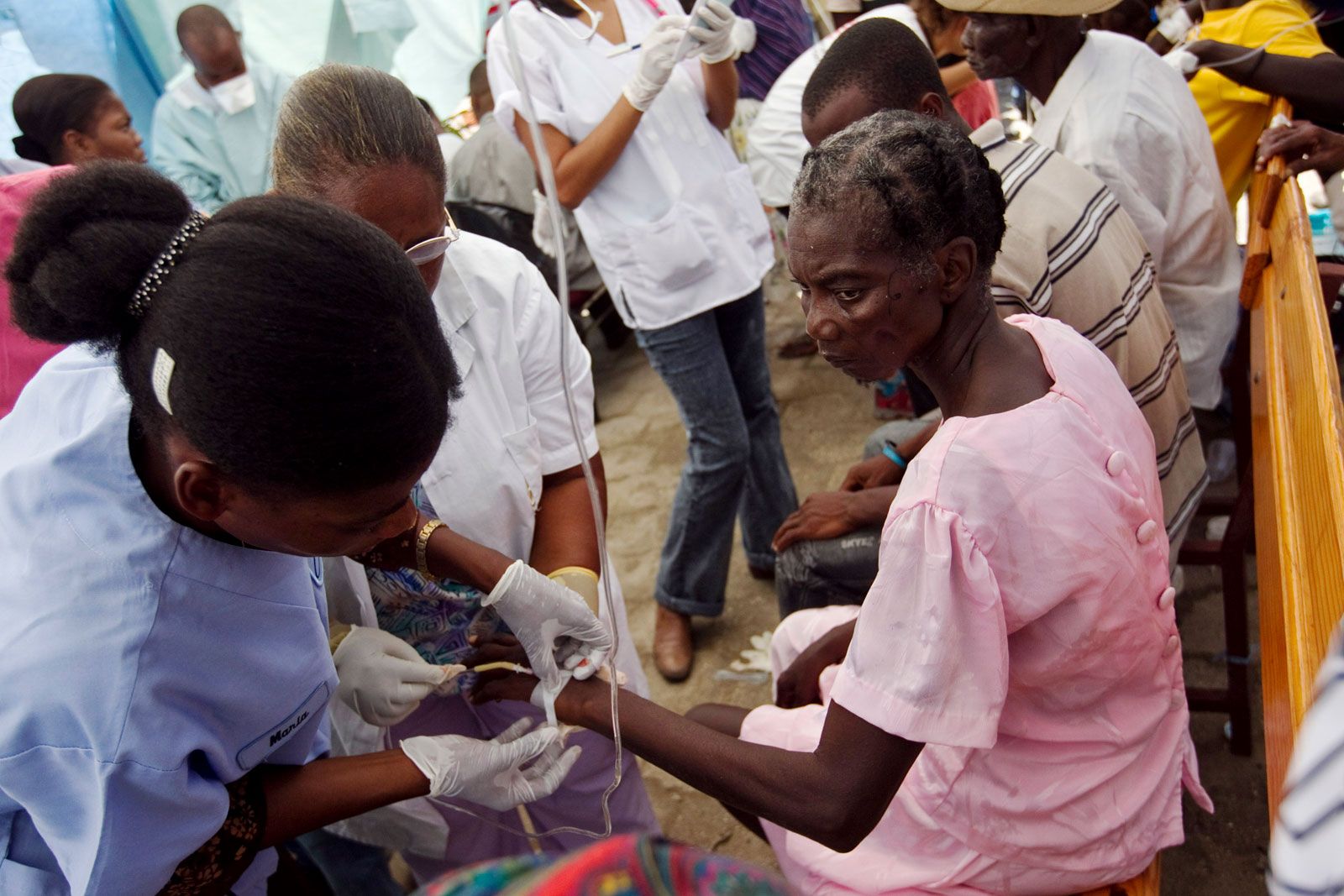
Early intravenous fluid treatments reduced cholera deaths by directly addressing the severe dehydration caused by the disease, which involves the rapid loss of water and essential salts through diarrhea and vomiting.12
While early 19th-century attempts to inject water and salts into the veins showed promise, they were not widely adopted, and mortality remained high. Significant progress occurred in the early 20th century when investigators like Sir Leonard Rogers developed replacement fluids with higher salt concentrations, which halved mortality rates from 60 percent to 30 percent. The subsequent addition of sodium bicarbonate to these intravenous solutions, as suggested by Andrew Sellards, further reduced mortality to 20 percent.3
By the mid-1960s, further refinements to these solutions and administration methods—notably by Robert A. Phillips—brought mortality rates down to under 1 percent. Today, intravenous rehydration remains a critical, life-saving intervention for patients who are too severely dehydrated to be treated with oral rehydration therapy.32