
Britannica
Sources used in this answer
How deeply does a third-degree burn extend into the skin?
Created from Britannica articles
using AI.
AI can make mistakes, so verify using Britannica articles.
burn
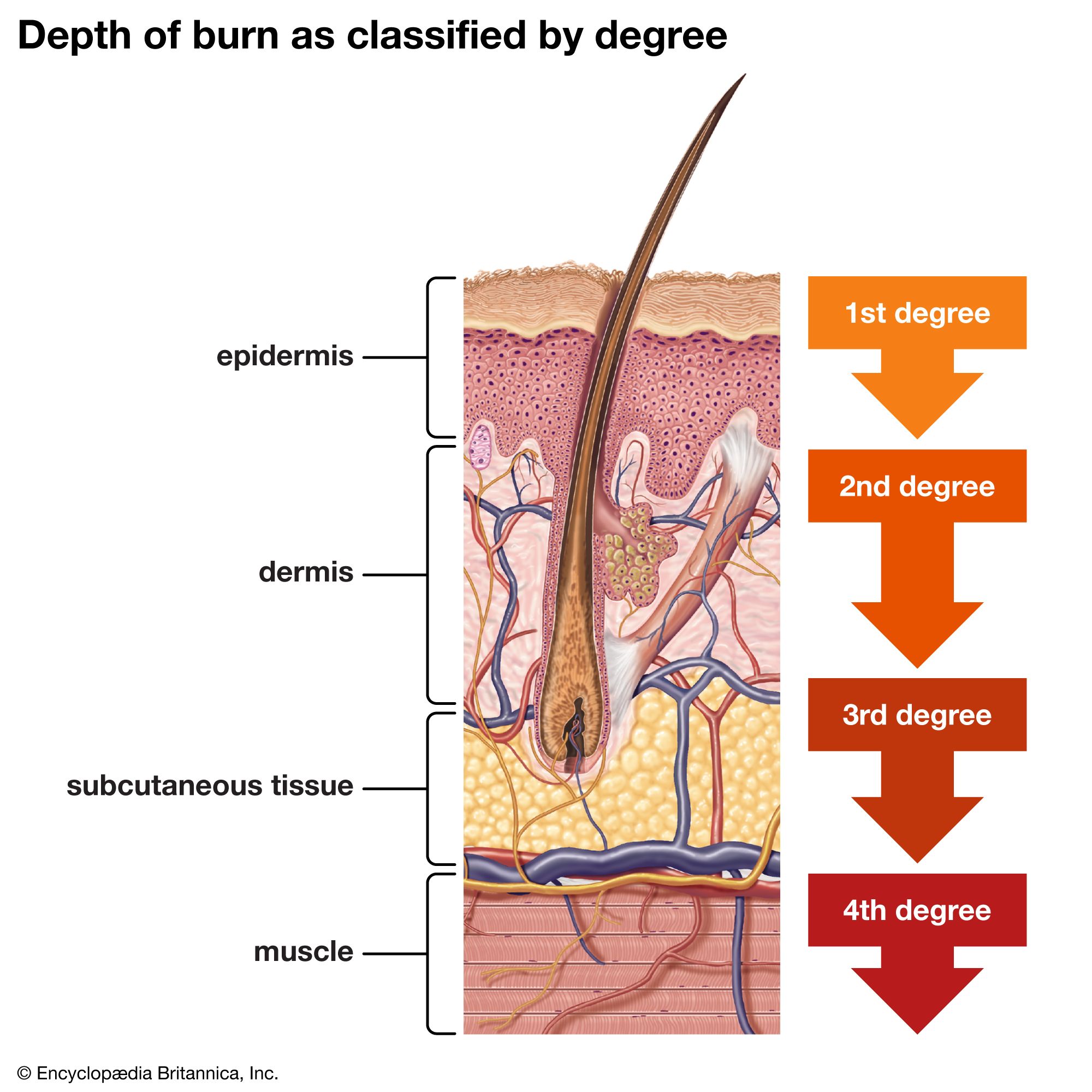
This diagram shows how burn injuries are classified by severity. First-degree burns damage the outer skin, known as the epidermis. First-degree burns are the least severe form of burn injury. Second-degree burns damage the outer skin and some of the underlying skin, known as the dermis, which also includes some connective tissue. Third-degree burns damage all the layers of skin, including subcutaneous tissue. Fourth-degree burns, which are the most severe, destroy every layer of skin and also damage muscle, tendons, and bones.
A third-degree burn, also referred to as a full-thickness burn, destroys the entire thickness of the skin. This includes the complete destruction of both the epidermis and the dermis.1
Because the injury reaches through the full depth of the skin, it obliterates blood vessels, sweat glands, sebaceous glands, hair follicles, and sensory nerve endings. Consequently, these wounds are characterized by a leathery surface and a lack of pain in the affected area.1