
Britannica
Sources used in this answer
- coloration - Structural and biochemical bases for colour
- coloration - Chemical and biochemical features
- coloration - Optical functions: combination of concealing and advertising coloration
- photoreception - Photopigments
- coloration - Pigments ( biochromes )
- coloration - Background matching
- coloration - Porphyrins
How can structural colors and pigment colors work together in the same organism?
Created from Britannica articles
using AI.
AI can make mistakes, so verify using Britannica articles.
coloration
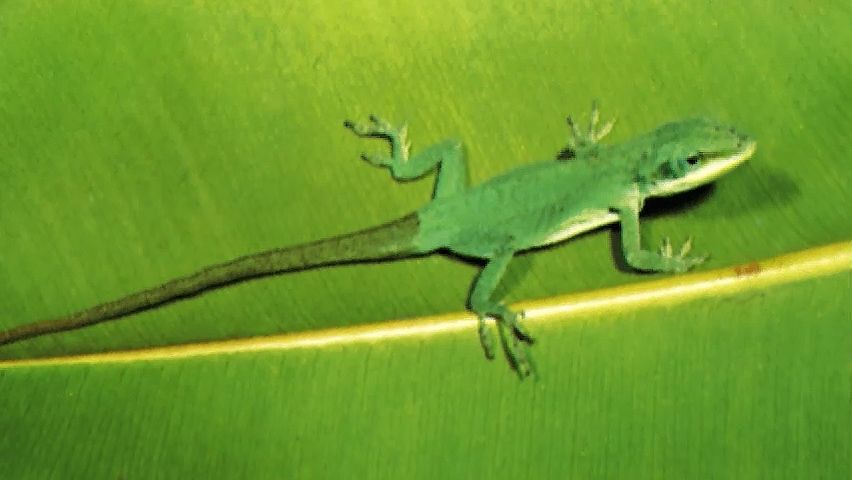
The anole changes color in response to its stress level.
In biological systems, structural colors and pigment colors (biochromes) often function in tandem to produce an organism's overall appearance. While structural colors are created by submicroscopic physical structures that fractionate incident light, pigmentary colors are produced by chemical compounds that selectively absorb portions of the solar spectrum.1
These two mechanisms work together in several ways:
- Reinforcement: The presence of biochromes frequently reinforces structural colors, enhancing the intensity or hue of the display.1
- Layering and Combination: Pigments may be located in various tissues, such as the skin, hair, feathers, or scales, while structural colors are generated by physical surface features. Together, they create complex visual effects that neither could achieve alone.2
- Adaptive Function: Many animals utilize these combined mechanisms to balance the competing needs of concealment and advertisement. For example, birds may hide brilliant structural or pigmentary courtship displays when feathers are held close to the body, only revealing them during social interactions.3
It is important to note that while pigments are molecular in origin and remain stable under physical stress, structural colors are often altered or destroyed by compression, grinding, or crushing.1