
Britannica
Sources used in this answer
How can seeing other animals eat influence an individual’s food choices?
Created from Britannica articles
using AI.
AI can make mistakes, so verify using Britannica articles.
Feeding behaviour
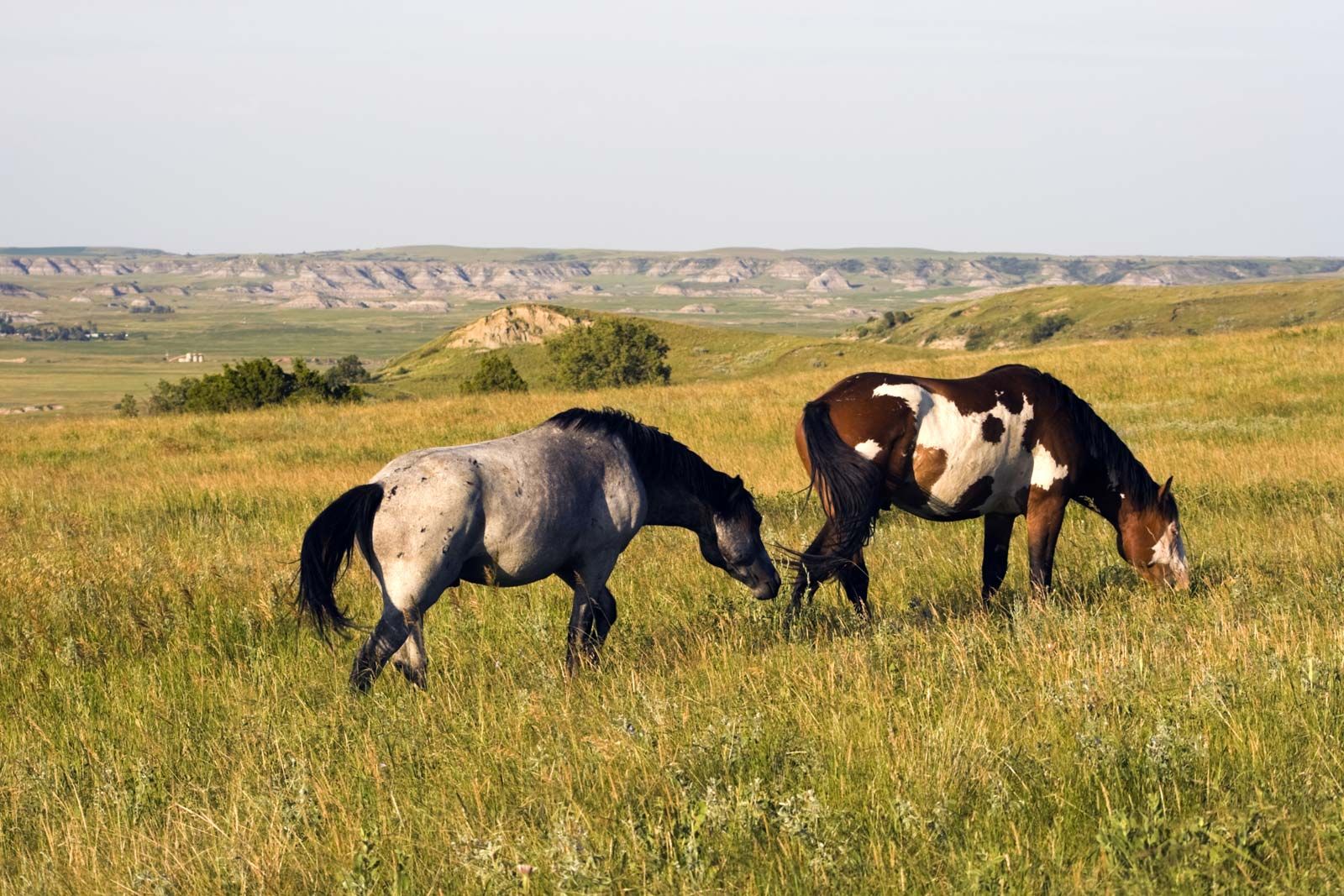
Wild horses graze in the Badlands of North Dakota.
Seeing other animals eat can significantly influence an individual’s food choices and feeding habits through several social mechanisms:
- Social Facilitation: The sight of other animals feeding can act as a stimulus that triggers an individual to begin eating, even if they are already satiated. This phenomenon is observed across various species, including mammals, birds, and fish.12
- Acceptance of Unfamiliar Food: An individual is more likely to accept and consume unfamiliar food if they observe other members of their species eating it. This serves as a form of social learning that can help animals identify safe or palatable food sources.2
- Information Sharing: In colonial species, such as certain birds, individuals may cue in on others returning to a nest with food. By following these successful foragers, they can locate productive feeding sites.3
- Imitation: Beyond simple facilitation, some animals learn specific techniques for processing food by observing others. For example, young oystercatchers learn how to open mussels by imitating the methods used by their parents, and macaques have been observed spreading new food-processing customs—such as washing sand off sweet potatoes—throughout their troop via observational learning.1