
Britannica
Sources used in this answer
How can grinding cause analyte loss from a sample?
Created from Britannica articles
using AI.
AI can make mistakes, so verify using Britannica articles.
sample preparation
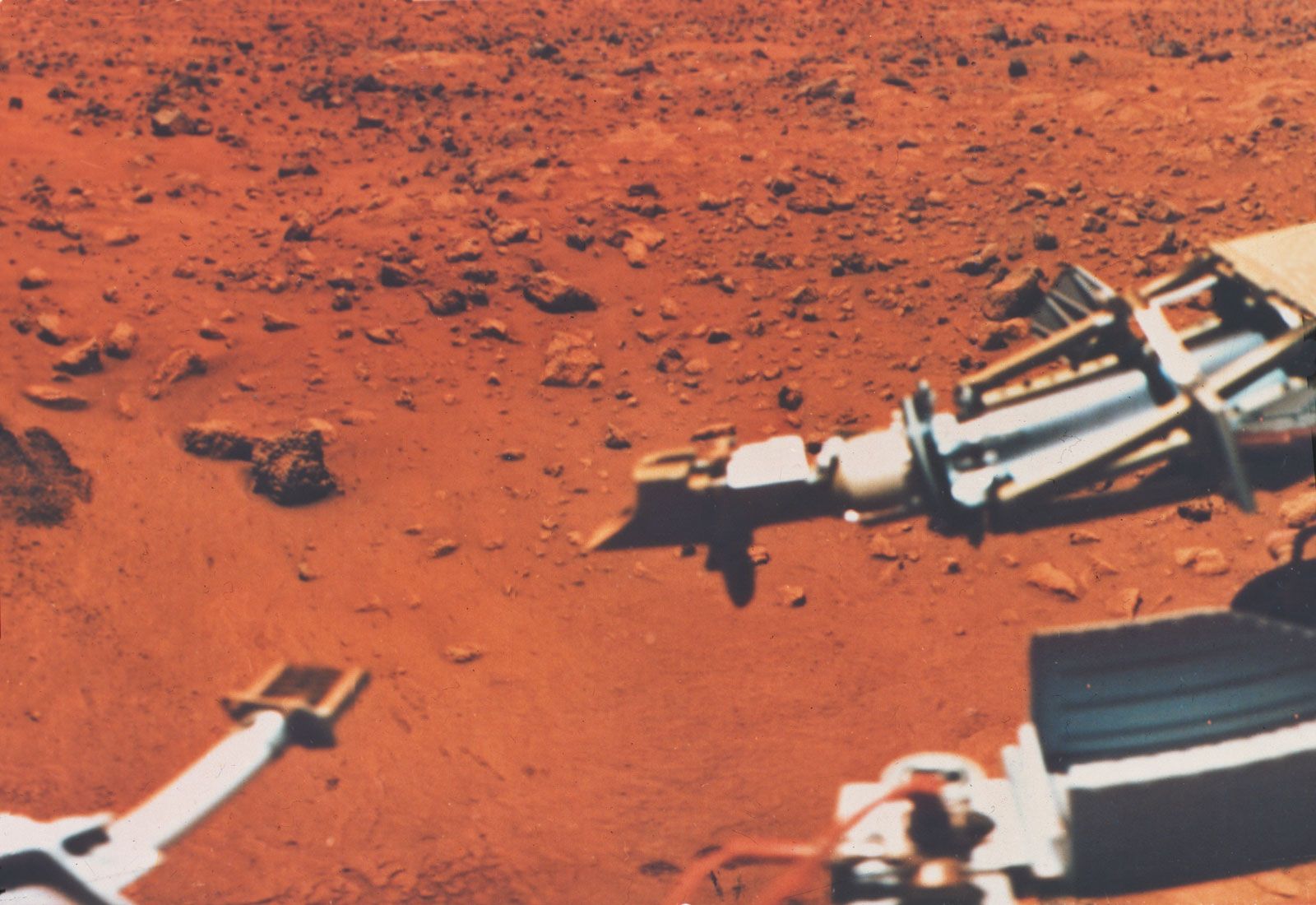
Viking 1's sample scoop, poised to extract material from the surface of Mars.
In the context of analytical chemistry, grinding—or comminution—is a necessary step to reduce particle size, but it can lead to analyte loss through several mechanisms:
- Transfer to Equipment: Excess grinding can cause the analyte to be lost directly to the grinding tool itself.1
- Loss of Fines: Overzealous grinding can result in the loss of very fine particles (fines) from the sample.1
- Absorption of Atmospheric Components: The process can lead to the sample absorbing atmospheric gases or moisture, which may interfere with the integrity of the sample or the determination of the analyte.1
To maintain the accuracy of chemical analysis, it is essential to balance the need for a fine particle size—often referred to as the liberation size—with the risks posed by over-processing the material.1