
Britannica
Sources used in this answer
How can excessive grinding contaminate a chemical sample?
Created from Britannica articles
using AI.
AI can make mistakes, so verify using Britannica articles.
sample preparation
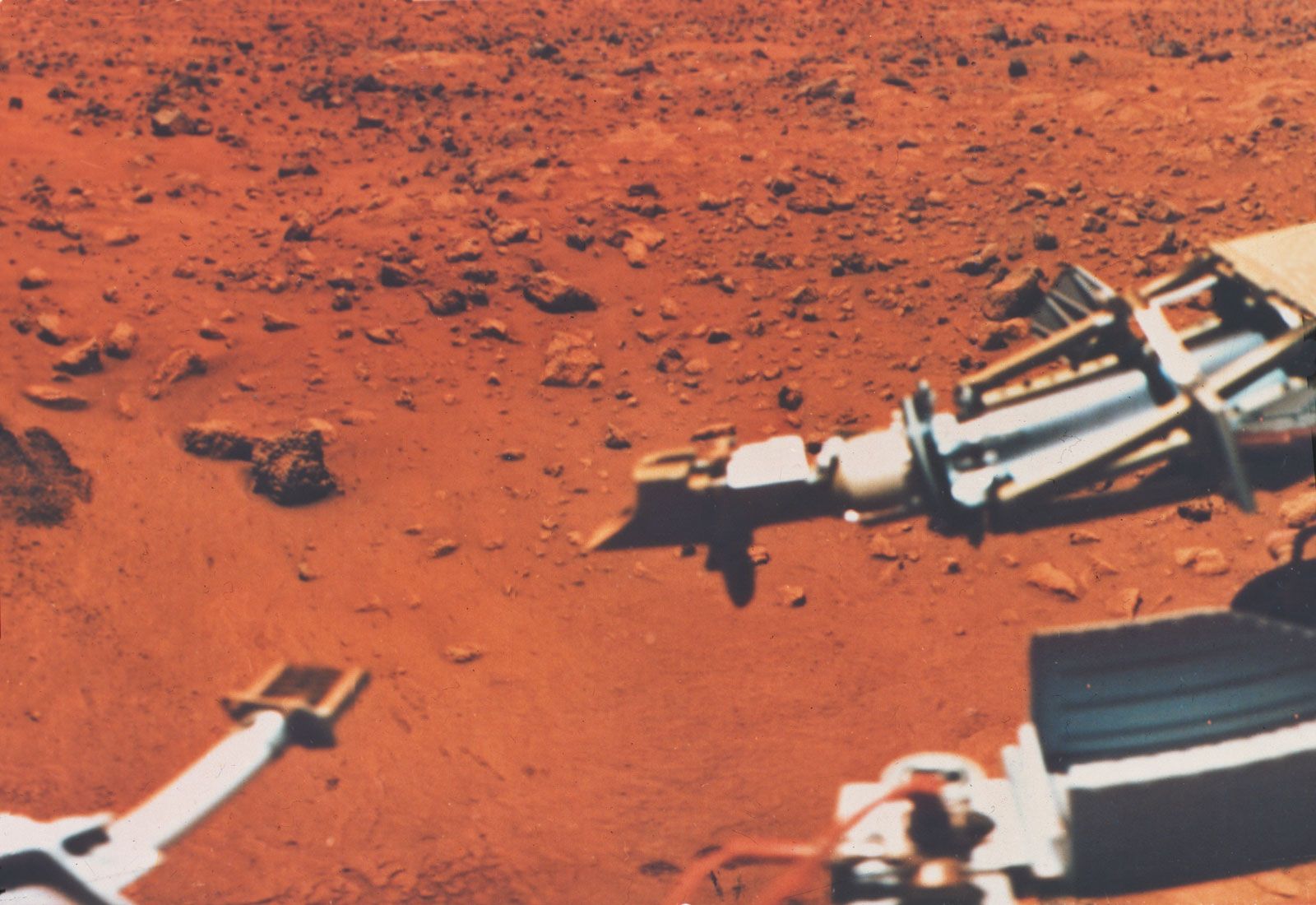
Viking 1's sample scoop, poised to extract material from the surface of Mars.
In the context of analytical chemistry, excessive grinding—also known as comminution—can compromise the integrity of a chemical sample in several ways:
- Tool Contamination: Prolonged contact between the sample and the grinding apparatus can lead to the introduction of foreign material from the grinding tool into the sample.1
- Analyte Loss: Excessive grinding may result in the loss of the specific analyte being measured, either through transfer to the grinding tool or through the loss of fine particles during the process.1
- Atmospheric Absorption: Overzealous grinding can increase the surface area of the material to a point where it becomes prone to absorbing atmospheric gases, including moisture, which can alter the chemical composition of the sample.1
Additionally, grinding a sample to an extremely fine state can sometimes make it difficult to achieve adequate mixing, which is essential for ensuring the test portion remains representative of the original material.1