
Britannica
Sources used in this answer
How can clean drinking water prevent cholera outbreaks?
Created from Britannica articles
using AI.
AI can make mistakes, so verify using Britannica articles.
cholera
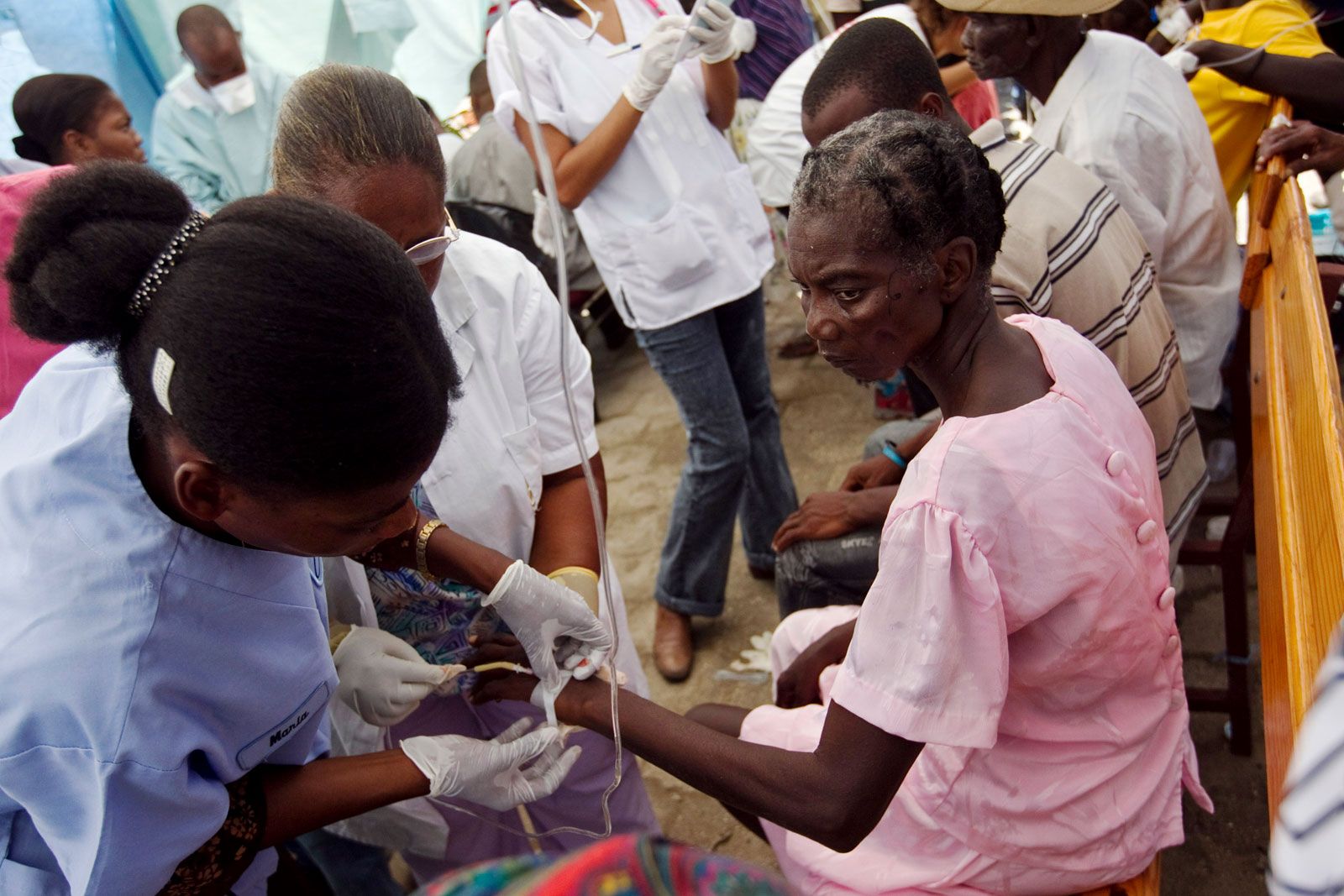
A woman with cholera being treated by nurses at St. Nicholas Hospital in Saint-Marc, Haiti, 2010.
Cholera is an intestinal disease that spreads primarily through the fecal-oral route, meaning it is transmitted when water contaminated with Vibrio cholerae bacteria is ingested. Because it is the archetype of waterborne illnesses, ensuring a safe, clean water supply is the most essential measure for preventing outbreaks.123
Clean water prevents the disease by breaking the cycle of transmission. Effective strategies include:
- Disinfection: Public water supplies can be treated with chlorine, or households can use chlorine tablets to ensure water is safe for consumption.23
- Boiling: When chemical disinfection is unavailable, boiling water is an effective way to eliminate the bacteria.23
- Safe Storage: Using narrow-necked jugs instead of open containers prevents water from becoming easily contaminated after it has been collected.3
- Monitoring: Modern methods can test environmental water supplies for the presence of V. cholerae, allowing for the rapid identification and containment of potential outbreak sources.3
Beyond water treatment, the hygienic disposal of human waste and the use of latrines are critical to preventing the contamination of water sources in the first place.23