
Britannica
Sources used in this answer
How can an animal’s past success finding food affect where it searches next?
Created from Britannica articles
using AI.
AI can make mistakes, so verify using Britannica articles.
Feeding behaviour
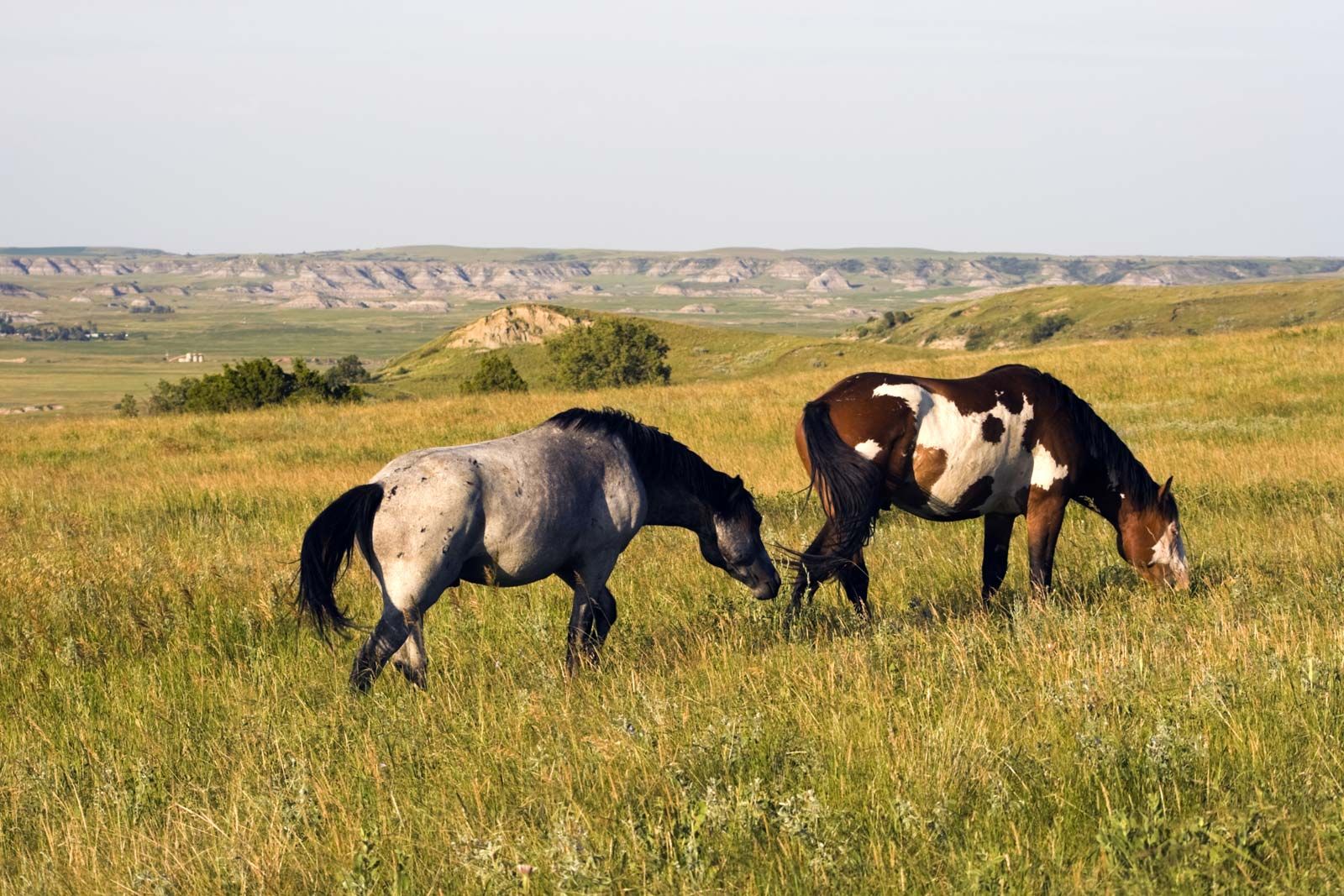
Wild horses graze in the Badlands of North Dakota.
An animal’s past success in finding food significantly influences its future foraging decisions through learning processes that help maximize its intake efficiency. Rather than searching randomly, animals often exhibit systematic behaviors based on their previous experiences:12
- Site Fidelity: Individuals frequently restrict their foraging to specific parts of their home range where they have previously found ample food.2
- Area-Restricted Search: Animals often search with special attention in the immediate locality where they have recently caught or seen prey.2
- Avoidance of Unproductive Areas: To maintain efficiency, animals tend to favor areas that have not been recently traversed over those that were just unsuccessfully explored.2
- Memory and Navigation: Many species, such as elephants, use memory to recall the locations of vital food and water sources, allowing them to return to these sites during seasonal migrations to ensure their survival.34
These behaviors are often guided by the law of effect, which selects for responses that have been followed by positive consequences, such as obtaining food.1