
Britannica
Sources used in this answer
How are skin grafts used to treat full-thickness burns?
Created from Britannica articles
using AI.
AI can make mistakes, so verify using Britannica articles.
burn
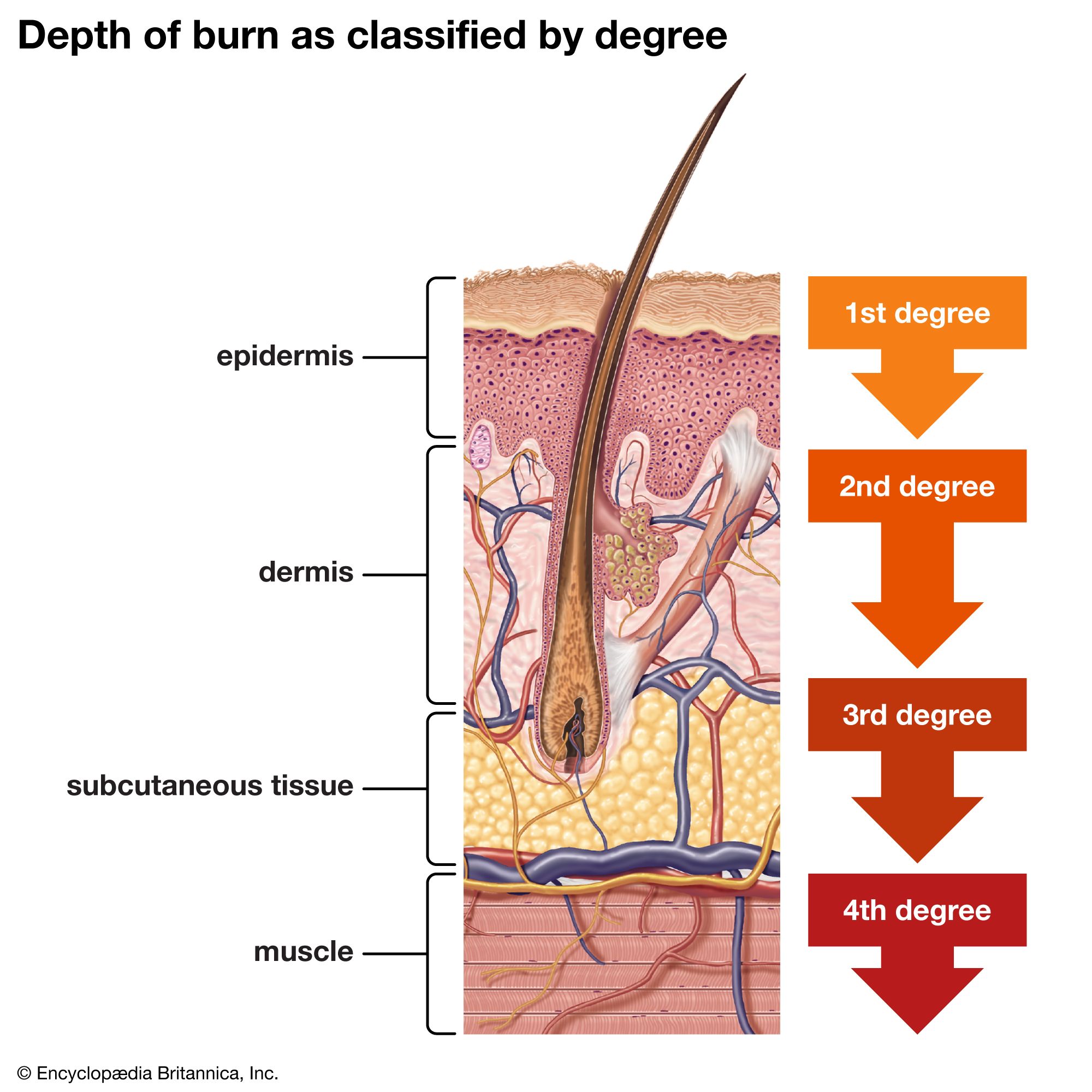
This diagram shows how burn injuries are classified by severity. First-degree burns damage the outer skin, known as the epidermis. First-degree burns are the least severe form of burn injury. Second-degree burns damage the outer skin and some of the underlying skin, known as the dermis, which also includes some connective tissue. Third-degree burns damage all the layers of skin, including subcutaneous tissue. Fourth-degree burns, which are the most severe, destroy every layer of skin and also damage muscle, tendons, and bones.
For full-thickness burns, which destroy the entire thickness of the skin, the primary goal of surgical treatment is to close the wound as quickly as possible to prevent infection and further tissue damage.1
The process typically involves the following steps:
- Primary Excision: Within 24 to 48 hours of the injury, surgeons perform a primary excision to remove necrotic (dead) tissue, known as eschar, to prepare the site for grafting.1
- Autografting: The standard method for permanent coverage is the use of autografts, which are grafts of the patient's own healthy skin harvested from uninjured areas of the body. Surgeons most commonly use split-thickness grafts—thin slices containing the epidermis and part of the dermis—harvested with an instrument called a dermatome.123
- Temporary Coverage: If the extent of the burn exceeds the amount of available donor skin, surgeons may use temporary measures to cover the wound, such as allografts (skin from cadavers), porcine xenografts (pigskin), or specialized plastic dressings.12
While full-thickness grafts (transferring the entire dermis and epidermis) exist, they are generally limited to small areas because the donor site requires surgical closure. For extensive burns, split-thickness autografts remain the final method of choice.341