
How are buckyballs related to graphene’s hexagonal structure?
Created from Britannica articles
using AI.
AI can make mistakes, so verify using Britannica articles.
graphene
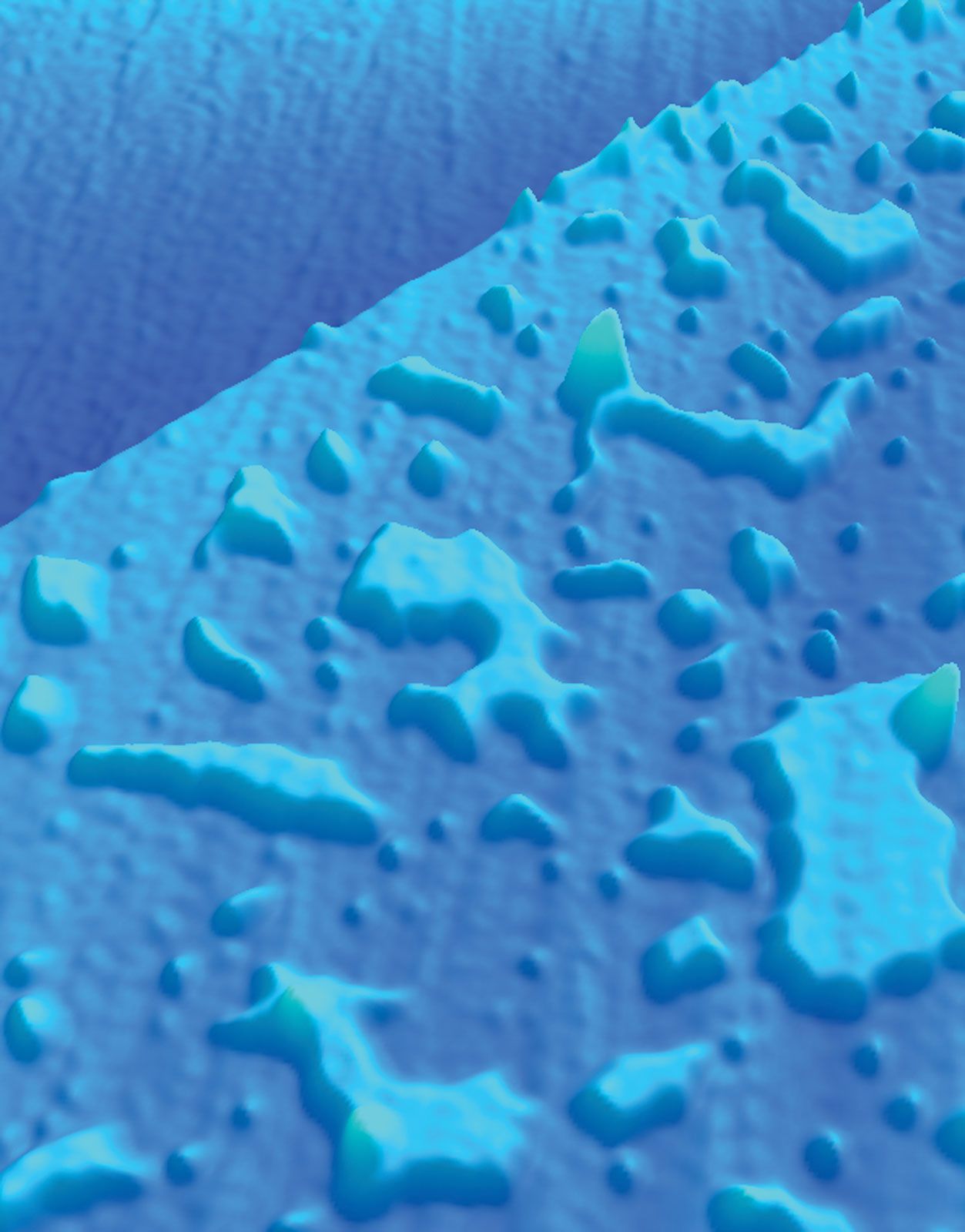
Atomic force microscopy image of water structures that were trapped beneath a sheet of graphene one atom thick.
Graphene is considered the parent form of various carbon structures, including buckyballs. While graphene consists of a flat, two-dimensional honeycomb lattice of carbon atoms arranged in hexagonal rings, buckyballs are spherical molecules derived from this structure.12
To form a buckyball, the hexagonal lattice of graphene must be modified by replacing some of its hexagonal rings with pentagonal rings. This introduction of pentagons creates the curvature necessary to close the flat graphene sheet into a hollow, cage-like sphere. Consequently, buckyballs represent a three-dimensional geometric transformation of graphene's fundamental hexagonal arrangement.12